
The startup ecosystem in 2026 is more competitive than ever, and mobile apps have become a critical tool for businesses to engage users, scale operations, and drive revenue. With billions of smartphone users worldwide and increasing reliance on digital platforms, startups must build high-performing, user-centric mobile applications to succeed. This is where Mobile App Development Tips play a crucial role, helping startups adopt the right strategies, technologies, and best practices to create scalable, efficient, and user-focused applications.
However, building a successful app is not just about coding—it requires strategic planning, the right technology stack, and a deep understanding of user behavior. Startups often face challenges such as limited budgets, tight timelines, and high competition, making it essential to adopt the right development approach from the beginning.
In 2026, trends like AI integration, cross-platform development, and real-time personalization are reshaping how mobile apps are built. Startups that leverage these innovations can launch faster, reduce costs, and deliver superior user experiences.
This guide covers everything startups need to know—from features and development process to cost, team structure, and monetization strategies—to build a scalable and successful mobile app.
Market Stats
The mobile app industry in 2026 is experiencing rapid growth and transformation, making it one of the most lucrative opportunities for startups. With increasing smartphone penetration, faster internet connectivity, and the rise of AI-driven applications, the global app ecosystem continues to expand at an impressive pace.
📊Global Market Size & Growth
- The global mobile application market is projected to reach approximately $330 billion in 2026, growing at a CAGR of over 15%.
- Some estimates suggest the market could exceed $377 billion in 2026, highlighting strong industry expansion.
- By 2034, the market is expected to surpass $1 trillion, indicating long-term growth potential.
👉 Key Insight:
The app market is not just growing—it’s becoming a core pillar of the global digital economy.
📥App Downloads & Usage Trends
- Global app downloads are expected to reach around 292 billion in 2026.
- Users spend an average of 3.5 hours per day on mobile apps.
- There are over 4.3 million apps available across app stores.
👉 Key Insight:
User engagement is at an all-time high, making mobile apps a primary channel for digital interaction.
💰 Revenue & Monetization Trends
- Global consumer spending on mobile apps is projected to reach $223+ billion in 2026.
- Subscription-based models account for 55%+ of app revenue, showing a shift toward recurring income.
- Mobile advertising generates hundreds of billions in revenue, contributing significantly to app monetization.
👉 Key Insight:
Monetization is evolving from one-time purchases to subscriptions and ad-driven models.
🌍 Platform & Regional Insights
- iOS generates significantly higher revenue per user, while Android leads in downloads and global reach.
- Asia-Pacific dominates the market with over 50% market share, driven by countries like India and China.
- Emerging markets are fueling growth due to increasing smartphone adoption and internet accessibility.
👉 Key Insight:
Startups should consider platform strategy and regional targeting for maximum impact.
🤖 Technology Trends Driving Growth
- AI-powered apps are becoming mainstream, with increasing adoption across industries.
- Cloud computing, 5G, and real-time features are accelerating app performance and scalability.
👉 Key Insight:
Innovation in AI and cloud technologies is shaping the future of mobile apps.
🎯 Final Insight
The mobile app market in 2026 offers massive opportunities for startups, but it is also highly competitive. Success depends on leveraging data-driven insights, adopting modern technologies, and focusing on user-centric experiences. Startups that align with these market trends can build scalable, profitable, and future-ready mobile applications.
Core Features of Mobile App Development Tips
For startups, building a successful mobile app starts with implementing the right core features. These foundational elements ensure the app is functional, user-friendly, and capable of delivering consistent value. Strong core features not only improve user experience but also lay the groundwork for future scalability and advanced capabilities.
👤 User Authentication & Profile Management
A smooth and secure onboarding process is essential for attracting and retaining users. Modern apps offer multiple login options such as email, social media, and biometric authentication.
Key elements:
- Secure sign-up and login
- Profile customization
- Password recovery and account management
Why it matters:
Enhances security while making access quick and convenient.
🎨 Intuitive UI/UX Design
A clean and user-friendly interface is critical for engagement. Users prefer apps that are easy to navigate and visually appealing.
Best practices:
- Simple navigation and layout
- Responsive design for all devices
- Consistent branding
Why it matters:
Improves usability and reduces user drop-offs.
🔍 Search & Navigation
Efficient search functionality helps users find content quickly, improving overall satisfaction.
Features include:
- Keyword search
- Filters and sorting
- Category-based browsing
Why it matters:
Saves time and enhances user experience.
🔔 Push Notifications
Push notifications keep users informed and engaged with timely updates.
Types:
- Transactional updates
- Promotional offers
- Personalized alerts
Why it matters:
Encourages repeat engagement when used strategically.
⚙️ Performance & Speed Optimization
Fast and responsive apps are essential for user retention.
Key aspects:
- Quick loading times
- Smooth navigation
- Efficient data handling
Why it matters:
Prevents user frustration and improves retention.
☁️ Cloud Integration
Cloud-based systems allow seamless data storage and scalability.
Benefits:
- Real-time data sync
- Secure storage
- Easy scalability
Why it matters:
Supports growth and ensures reliability.
📊 Analytics & Insights
Analytics tools help track user behavior and app performance.
Metrics:
- User engagement
- Retention rate
- Session duration
Why it matters:
Enables data-driven improvements.
🔐 Basic Security Features
Security is essential to protect user data and maintain trust.
Includes:
- Data encryption
- Secure APIs
- Authentication protocols
Why it matters:
Ensures safe and reliable app usage.
🎯 Final Insight
Core features are the backbone of any mobile app. By focusing on usability, performance, and security, startups can build strong, scalable apps that meet user expectations and support long-term success.
Advanced Features of Mobile App Development Tips
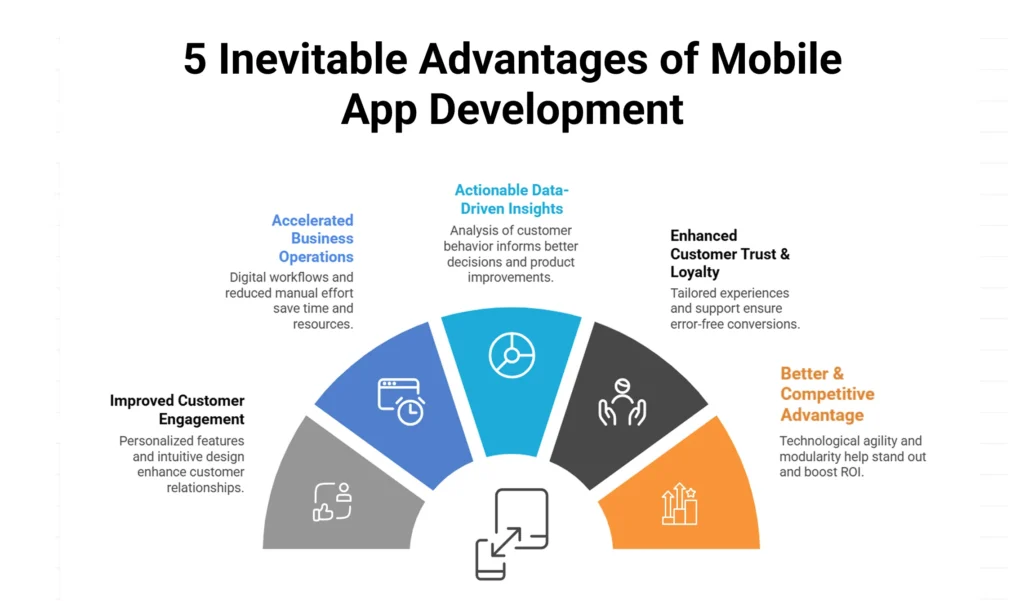
In 2026, advanced features are what separate average apps from market leaders. Startups must go beyond basic functionality and focus on intelligent, scalable, and highly engaging capabilities that enhance user experience and drive long-term growth. These features not only improve usability but also create strong competitive differentiation.
🤖 AI & Machine Learning (Hyper-Personalization)
AI is no longer optional—it’s a core component of modern mobile apps. By leveraging machine learning algorithms, apps can analyze user behavior, preferences, and interactions in real time.
Key capabilities:
- Personalized content and product recommendations
- Predictive analytics for user behavior
- AI chatbots for 24/7 customer support
- Smart automation of repetitive tasks
Impact:
AI significantly boosts engagement, increases retention, and improves conversion rates by delivering highly relevant user experiences.
📡 Real-Time Functionality & Instant Interactions
Modern users expect instant responses and live updates. Real-time features enhance interactivity and create a dynamic app experience.
Examples:
- Live chat and messaging systems
- Real-time order tracking (e.g., delivery apps)
- Instant notifications and activity feeds
- Collaborative features (shared dashboards, live edits)
Impact:
Keeps users engaged and improves satisfaction by providing immediate value.
🧠 Augmented Reality (AR) & Immersive Experiences
AR technology is transforming how users interact with digital products. It blends digital content with the real world, offering immersive experiences.
Use cases:
- Virtual try-ons for fashion and beauty apps
- Interactive product previews in e-commerce
- AR-based learning in education apps
Impact:
Increases engagement, reduces purchase hesitation, and enhances user experience.
🗣️ Voice Search & Multimodal Interaction
Voice-enabled interfaces are becoming mainstream, especially with the rise of smart assistants.
Features include:
- Voice commands for navigation
- Speech-to-text search functionality
- Integration with Siri, Alexa, or Google Assistant
Impact:
Improves accessibility and provides a hands-free, convenient user experience.
☁️ Cloud Integration & Serverless Architecture
Cloud computing enables startups to build scalable and cost-efficient apps without heavy infrastructure investment.
Benefits:
- Real-time data synchronization
- High scalability for growing user bases
- Reduced operational and maintenance costs
- Faster deployment with serverless architecture
Impact:
Ensures smooth performance and supports rapid scaling.
🔐 Advanced Security & Privacy Protection
Security is critical in 2026 due to increasing cyber threats and stricter data regulations.
Key features:
- End-to-end encryption
- Biometric authentication (fingerprint, face ID)
- Secure APIs and token-based authentication
- Fraud detection and anomaly monitoring
Impact:
Builds user trust and protects sensitive data, which is essential for long-term success.
📊 Advanced Analytics & Data-Driven Insights
Data analytics tools help startups understand user behavior and optimize app performance.
Capabilities:
- User journey tracking
- Engagement and retention analysis
- Real-time performance dashboards
- A/B testing for feature optimization
Impact:
Enables data-driven decisions that improve user experience and revenue.
🎮 Gamification & Engagement Mechanics
Gamification elements make apps more engaging and addictive.
Examples:
- Rewards, badges, and leaderboards
- Progress tracking and achievements
- Referral and loyalty programs
Impact:
Boosts user retention and increases time spent on the app.
🎯 Final Insight
Advanced features are the backbone of next-generation mobile apps. By combining AI, real-time functionality, immersive technologies, and strong security, startups can build highly engaging, scalable, and future-ready applications that not only meet but exceed user expectations in 2026.
Development Process of Mobile App Development Tips
Building a successful mobile app in 2026 requires a structured, agile, and user-focused development process. For startups, following a well-defined approach helps reduce risks, optimize costs, and accelerate time-to-market while ensuring a high-quality product.
🔍 Step 1: Market Research & Idea Validation
The process begins with understanding the target audience, identifying market gaps, and analyzing competitors. Startups should validate their app idea through surveys, feedback, or MVP concepts to ensure real demand exists.
Why it matters:
Prevents building products that fail due to lack of market need.
🧩 Step 2: Define MVP & Feature Prioritization
Instead of building a full-featured app initially, startups should focus on a Minimum Viable Product (MVP). Core features that solve the primary problem are prioritized, while additional features are planned for future releases.
Why it matters:
Reduces development time and cost while enabling faster market entry.
🎨 Step 3: UI/UX Design
Designers create intuitive, engaging, and user-friendly interfaces. Wireframes, prototypes, and user flows are developed to visualize the app experience and ensure seamless navigation.
Why it matters:
A well-designed UI/UX increases user satisfaction and retention.
💻Step 4: Mobile App Development Tips
This is the core phase where the application is built.
Frontend Development:
- Develop user interfaces
- Ensure responsiveness across devices
Backend Development:
- Build APIs and databases
- Implement business logic and integrations
Why it matters:
Ensures the app is functional, scalable, and efficient.
🔗 Step 5: Third-Party Integrations
Integrating external services enhances functionality and reduces development effort.
Examples:
- Payment gateways (Stripe, Razorpay)
- Push notifications (Firebase)
- Analytics tools
Why it matters:
Adds essential features quickly and cost-effectively.
🧪 Step 6: Testing & Quality Assurance
Comprehensive testing ensures the app works smoothly across devices and platforms. This includes functional testing, performance testing, and security checks.
Why it matters:
Prevents bugs and ensures a seamless user experience.
🚀 Step 7: Deployment & Launch
Once testing is complete, the app is deployed on platforms like Google Play Store and Apple App Store. A soft launch may be used to gather feedback before a full release.
Why it matters:
Ensures a smooth and stable launch.
📈 Step 8: Post-Launch Monitoring & Updates
After launch, continuous monitoring is essential. Startups should track user behavior, fix bugs, and release updates to improve performance and add new features.
Why it matters:
Ensures long-term success and scalability.
🎯 Final Insight
A well-planned development process enables startups to build scalable, high-performance mobile apps efficiently. By focusing on MVP, user experience, and continuous improvement, startups can reduce risks and achieve faster growth in a competitive market.
Required Team Structure
Building a successful mobile app in 2026 requires more than just developers—it demands a well-coordinated, cross-functional team that can handle strategy, design, development, testing, and growth. For startups, assembling the right team is crucial to ensure faster development, cost efficiency, and long-term scalability.
The ideal team size typically ranges from 6 to 12 professionals for an MVP and can scale further as the product grows.
👨💼 1. Product Manager (Vision & Strategy Lead)
The Product Manager is responsible for defining the product vision and ensuring that development aligns with business goals.
Key responsibilities:
- Define product roadmap and feature priorities
- Coordinate between teams and stakeholders
- Track KPIs such as user growth and retention
Why it matters:
Ensures the product solves real problems and delivers value.
📊 2. Business Analyst (Requirement Specialist)
The Business Analyst bridges the gap between business goals and technical execution.
Key responsibilities:
- Gather and document requirements
- Analyze market trends and competitors
- Define user journeys and workflows
Why it matters:
Reduces ambiguity and ensures efficient development.
🎨 3. UI/UX Designer (User Experience Expert)
Designers focus on creating intuitive and engaging user interfaces.
Key responsibilities:
- Create wireframes and prototypes
- Design user-friendly layouts
- Optimize navigation and usability
Why it matters:
A great user experience increases engagement and retention.
💻4. Mobile App Development Tips
Developers are responsible for building the app’s functionality.
Key roles:
- Frontend Developers: Build user interfaces
- Backend Developers: Manage servers, APIs, and databases
Technologies:
Flutter, React Native, Swift, Kotlin, Node.js
Why it matters:
They ensure performance, scalability, and reliability.
⚙️ 5. DevOps Engineer (Infrastructure & Deployment)
DevOps ensures smooth deployment and scalability.
Key responsibilities:
- Set up cloud infrastructure (AWS, Azure)
- Implement CI/CD pipelines
- Monitor app performance
Why it matters:
Ensures faster releases and system stability.
🔐 6. Security Specialist (Data Protection Expert)
Security is essential, especially for apps handling sensitive data.
Key responsibilities:
- Implement encryption and secure APIs
- Prevent data breaches
- Ensure compliance standards
Why it matters:
Builds user trust and protects data.
🧪 7. QA Engineer (Quality Assurance)
QA engineers ensure the app works flawlessly before launch.
Key responsibilities:
- Perform functional and performance testing
- Identify bugs and issues
- Ensure cross-device compatibility
Why it matters:
Prevents poor user experience and negative reviews.
📣8. Mobile App Development Tips
A strong marketing team helps scale the app.
Key responsibilities:
- User acquisition campaigns
- App Store Optimization (ASO)
- Social media and paid ads
Why it matters:
Drives downloads and user engagement.
🎧 9. Customer Support Team
Support teams handle user queries and issues post-launch.
Key responsibilities:
- Resolve user complaints
- Provide technical support
- Collect feedback
Why it matters:
Improves retention and satisfaction.
👥 Team Structure by Stage
🚀 MVP Stage (6–8 Members)
Product Manager, Designer, 2 Developers, QA, part-time DevOps
📈 Growth Stage (8–12 Members)
Add Business Analyst, Marketing, Security
🌍 Scaling Stage (12+ Members)
Dedicated DevOps, analytics, support, and growth teams
🎯 Final Insight
A strong team structure is the backbone of successful mobile app development. By combining technical expertise with strategic planning and user-focused design, startups can build scalable, high-performance apps that stand out in a competitive market.
Monetization Methods of Mobile App Development Tips
Monetization is a critical factor for startups building mobile apps, as it directly impacts long-term sustainability and growth. In 2026, successful apps rarely rely on a single revenue stream—instead, they adopt a hybrid monetization strategy that balances profitability with user experience.
💰 Subscription Model (Recurring Revenue)
The subscription model is one of the most popular and reliable monetization strategies. Users pay a monthly or yearly fee to access premium features or content. Startups can offer multiple pricing tiers—basic, standard, and premium—to cater to different user segments.
Benefits:
- Predictable and recurring revenue
- Higher customer lifetime value (LTV)
- Strong user retention
📺 Ad-Based Model (Freemium Access)
In this model, users can access the app for free while revenue is generated through advertisements. Common formats include banner ads, video ads, and native ads.
Benefits:
- Attracts a large user base
- No upfront cost for users
- Scalable revenue with increased traffic
🎬 Freemium Model
The freemium model combines free and paid offerings. Users can access basic features for free but must upgrade to unlock advanced functionalities.
Benefits:
- Easy onboarding
- High conversion potential
- Flexible pricing strategy
🛍️ In-App Purchases
Apps can generate revenue by offering digital products, premium content, or additional features within the app.
Examples:
- Virtual goods in gaming apps
- Premium filters or tools
- Content unlocks
Benefits:
- Increases average revenue per user (ARPU)
- Encourages user engagement
🤝 Partnerships & Sponsorships
Collaborating with brands and businesses can open additional revenue streams. Sponsored content, brand placements, and affiliate marketing are common approaches.
Benefits:
- Additional income without charging users
- Increased brand exposure
📊 Mobile App Development Tips
With user consent, anonymized data can be used to generate insights for businesses. This can include user behavior analysis and market trends.
Benefits:
- Valuable business intelligence
- Additional revenue stream
🌐 API Monetization & Integrations
If your app provides unique services or data, you can offer APIs to third-party developers and charge for access or usage.
🎯 Final Insight
The most successful startups in 2026 use a combination of monetization strategies to maximize revenue while maintaining a seamless user experience. By balancing value and profitability, startups can build sustainable and scalable mobile applications in a competitive market.
Mobile App Development Tips
The cost of mobile app development in 2026 varies significantly depending on the app’s complexity, feature set, technology stack, and development approach. For startups, understanding these cost factors is crucial for budgeting effectively and avoiding unexpected expenses during the development lifecycle.
💸 Cost Breakdown
- Basic App ($20,000 – $50,000)
These apps include essential features such as user authentication, basic UI/UX, and limited functionality. Ideal for MVPs, they allow startups to test their idea in the market with minimal investment. - Mid-Level App ($50,000 – $120,000)
Mid-tier applications include advanced features like real-time updates, API integrations, payment gateways, and improved UI/UX design. These apps are suitable for startups aiming to scale and enhance user engagement. - Advanced App ($120,000 – $300,000+)
High-end applications include AI integration, real-time analytics, AR/VR features, and complex backend systems. These apps are designed for scalability and high performance, often supporting thousands or millions of users.
⏱️ Development Timeline
- MVP Development: 2–4 months
- Mid-Level App: 4–6 months
- Advanced App: 6–10+ months
📊 Key Cost Factors
Several factors influence the total development cost:
- Feature Complexity: More features require more development time and resources
- Platform Choice: Native apps (iOS/Android) are more expensive than cross-platform solutions
- Technology Stack: Advanced technologies like AI or blockchain increase costs
- UI/UX Design: Custom and interactive designs require additional effort
- Third-Party Integrations: APIs, payment gateways, and cloud services add to the cost
- Team Location: Development costs vary by region (US > Europe > India)
💡 Cost Optimization Tips for Startups
- Start with an MVP and scale gradually
- Use cross-platform frameworks like Flutter or React Native
- Leverage cloud-based services to reduce infrastructure costs
- Outsource development to cost-effective regions
- Prioritize features based on user needs

🎯 Final Insight
While mobile app development requires a significant investment, a well-planned strategy ensures maximum ROI. By focusing on essential features, choosing the right technology, and adopting a phased approach, startups can build high-quality apps within budget while preparing for future growth.
Conclusion
Mobile app development in 2026 offers immense opportunities for startups, but success requires more than just building an app. Startups must focus on user experience, scalability, and innovation to stand out in a competitive market.
By leveraging modern technologies like AI, cloud computing, and cross-platform frameworks, startups can reduce costs, accelerate development, and deliver high-quality apps. A well-planned strategy, combined with the right team and monetization model, ensures long-term success.
The future of mobile apps lies in personalization, automation, and seamless user experiences. Startups that embrace these trends early will gain a strong competitive advantage.
FAQs
It ranges from $20,000 to $300,000+ depending on complexity.
Typically, 2–6 months for MVP, longer for advanced apps.
Flutter, React Native, Node.js, and cloud platforms like AWS.
User authentication, UI/UX, notifications, analytics, and security.
Subscriptions, ads, in-app purchases, and partnerships.