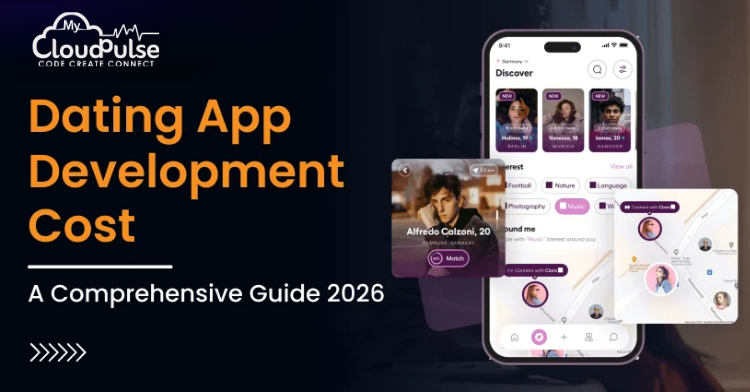
The dating app industry has evolved significantly over the past decade, becoming one of the most profitable and competitive segments in the mobile app ecosystem. In 2026, dating apps are no longer limited to simple matchmaking—they now offer AI-powered recommendations, real-time interactions, and hyper-personalized user experiences. Understanding the Dating App Development Cost 2026 is essential for startups and businesses looking to enter this dynamic market, as it helps in planning budgets, selecting the right features, and building scalable, future-ready applications.
With millions of users actively seeking meaningful connections online, startups and businesses are increasingly investing in dating app development to tap into this growing market. Platforms like Tinder, Bumble, and Hinge have set high standards, making it essential for new entrants to focus on innovation, usability, and performance.
However, one of the most common questions entrepreneurs ask is: “How much does it cost to develop a dating app in 2026?” The answer depends on multiple factors, including features, design complexity, technology stack, and development team.
This comprehensive guide explores the cost, features, development process, team structure, and monetization strategies required to build a successful dating app in 2026.
Market Stats
The dating app industry in 2026 continues to show steady growth, high user engagement, and strong revenue potential, making it an attractive market for startups and investors. Driven by changing social behaviors, mobile-first users, and AI-powered experiences, the industry has evolved into a multi-billion-dollar global ecosystem.
📊 Global Market Size & Growth
- The global dating app market is valued at approximately $14–15 billion in 2026 and is projected to reach $32+ billion by 2035, growing at a CAGR of around 9%
- Another estimate shows the market reaching around $13 billion in 2026, maintaining a steady annual growth rate of 7–8%
- The broader online dating application market is expected to exceed $14.4 billion by 2030, highlighting long-term scalability
👉 Key Insight:
The industry is not just growing—it is becoming a mainstream digital service globally.
👥 User Base & Adoption Trends
- Over 380–400 million people worldwide actively use dating apps
- The 25–34 age group represents the largest segment, accounting for around 35% of users
- India leads globally with 100+ million dating app users, making it a key growth market
👉 Key Insight:
The massive and growing user base offers huge opportunities for new entrants.
📱 User Behavior & Engagement
- Around 70% of users prefer mobile-based dating apps over web platforms
- Nearly 55% of users engage with dating apps daily, indicating high retention and usage
- Swipe-based interactions dominate, with apps like Tinder setting global UX standards
👉 Key Insight:
High engagement levels make dating apps one of the most addictive app categories.
💰 Revenue & Monetization Trends
- Leading apps like Tinder generate over $1 billion annually, showcasing strong monetization potential
- Around 45% of users are willing to pay for premium features such as advanced filters and boosts
- Subscription-based models and in-app purchases dominate revenue streams
👉 Key Insight:
Users are increasingly open to paying for better matchmaking and visibility.
🌍 Regional & Technology Trends
- North America and Europe account for nearly 60% of total revenue, while Asia-Pacific is the fastest-growing region
- AI adoption is accelerating, with users expecting smarter matchmaking and personalization features
- Safety and verification technologies are becoming essential due to rising concerns about fraud and fake profiles
👉 Key Insight:
Innovation in AI and security is shaping the future of dating apps.
🎯 Final Insight
The dating app market in 2026 is highly competitive but full of opportunity. With hundreds of millions of users and growing willingness to pay for premium features, startups that focus on innovation, trust, and user experience can build scalable and profitable platforms in this evolving digital landscape.
Core Features of Dating App Development Cost
The foundation of any successful dating app lies in its core features, which ensure smooth functionality, user engagement, and a secure experience. In 2026, users expect dating apps to be fast, intuitive, and reliable, making it essential for startups to prioritize these fundamental elements.
👤 User Registration & Profile Management
A seamless onboarding process helps users get started quickly. Apps should offer multiple sign-up options such as email, phone number, or social media login.
Key elements:
- Easy registration and login
- Profile creation with photos, bio, and preferences
- Profile editing and privacy settings
Why it matters:
Simplifies access and builds user trust from the start.
❤️ Matching System
The matching feature is the core of any dating app. Basic algorithms connect users based on preferences like age, location, and interests.
Features include:
- Preference-based matching
- Location-based suggestions
- Basic filters
Why it matters:
Ensures relevant matches and improves user satisfaction.
👉 Swipe & Interaction Features
Swipe functionality makes the app interactive and easy to use.
Key actions:
- Swipe right (like)
- Swipe left (pass)
- Match notifications
Why it matters:
Enhances user engagement and keeps the experience simple.
💬 Messaging System
A real-time chat feature allows users to communicate after matching.
Includes:
- Instant messaging
- Media sharing (images, emojis)
- Notifications
Why it matters:
Encourages interaction and builds connections.
📍 Geolocation
Location-based matching helps users find nearby connections.
Capabilities:
- Nearby match suggestions
- Distance filters
Why it matters:
Makes matches more relevant and practical.
🔔 Push Notifications
Notifications keep users informed and engaged.
Examples:
- New matches
- Messages
- Activity updates
Why it matters:
Drives repeat usage and retention.
🔐 Basic Security Features
User safety is critical in dating apps.
Includes:
- Profile verification
- Report/block options
- Secure login
Why it matters:
Builds trust and ensures a safe environment.
🎯 Final Insight
Core features provide the essential framework for a dating app. By focusing on usability, performance, and security, startups can deliver a reliable and engaging experience that supports long-term growth.
Advanced Features of Dating App Development Cost
In 2026, the success of a dating app depends heavily on its ability to deliver intelligent, engaging, and secure user experiences. While core features provide the foundation, advanced features are what truly differentiate your app in a crowded market. These innovations not only enhance usability but also improve matchmaking accuracy, user retention, and monetization potential.
🤖 AI-Powered Matchmaking & Personalization
Artificial Intelligence has become the backbone of modern dating apps. Instead of relying solely on location or basic preferences, AI analyzes user behavior, interests, swiping patterns, and interactions to deliver highly accurate matches.
Key capabilities:
- Behavior-based matching algorithms
- Compatibility scoring systems
- Personalized profile suggestions
- Smart recommendations based on activity
Impact:
Improves match quality, increases user satisfaction, and boosts engagement.
🎥 Video Profiles & Real-Time Video Calling
Video-based features are becoming increasingly popular as they help users build trust and authenticity.
Features include:
- Short video introductions
- Live video chat between matches
- Virtual dating experiences
Impact:
Reduces fake profiles, enhances user trust, and improves interaction quality.
📡 Live Streaming & Social Interaction
Modern dating apps are evolving into social platforms by integrating live streaming features.
Capabilities:
- Users can host live sessions
- Real-time audience interaction
- Virtual gifting and monetization
Impact:
Increases user engagement and opens new revenue streams.
🧠 Personality & Interest-Based Matching
Advanced apps go beyond surface-level preferences by incorporating psychological and behavioral data.
Examples:
- Personality tests and quizzes
- Interest-based communities
- Compatibility analysis
Impact:
Creates deeper and more meaningful connections.
🗣️ Voice Features & Audio Interaction
Voice-based communication adds a personal touch to digital interactions.
Features include:
- Voice notes in chat
- Audio-based introductions
- Voice-enabled navigation
Impact:
Enhances user experience and accessibility.
🔐 Advanced Security & Trust Mechanisms
Security is critical in dating apps due to privacy concerns and potential misuse.
Key features:
- AI-based profile verification (face recognition)
- Fraud detection systems
- End-to-end encryption
- Real-time moderation tools
Impact:
Builds user trust and ensures platform safety.
📍 Smart Location & Geo-Fencing
Advanced geolocation features improve match relevance.
Capabilities:
- Dynamic location-based matching
- Geo-fencing for events or communities
- Travel mode for global connections
Impact:
Enhances match accuracy and user convenience.
🎮 Gamification & Engagement Tools
Gamification elements make the app more interactive and addictive.
Examples:
- Super likes and boosts
- Daily rewards and streaks
- Leaderboards and achievements
Impact:
Increases user retention and time spent on the app.
☁️ Cloud Integration & Scalability
Cloud-based infrastructure ensures seamless performance even with a growing user base.
Benefits:
- Real-time data synchronization
- Scalable backend systems
- High availability and uptime
Impact:
Supports long-term growth and reliability.
🎯 Final Insight
Advanced features are essential for building a next-generation dating app in 2026. By integrating AI, video interactions, real-time features, and strong security measures, startups can create highly engaging, trustworthy, and scalable platforms that stand out in a competitive market.
Development Process of Dating App Development cost
Building a dating app in 2026 requires a structured, agile, and user-centric development process. Since dating apps involve real-time interactions, location services, and sensitive user data, each stage must be carefully planned and executed to ensure performance, security, and scalability.
🔍 Step 1: Market Research & Idea Validation
The process begins with identifying your target audience and analyzing competitors like Tinder, Bumble, and Hinge. Understanding user preferences, pain points, and expectations helps define a unique value proposition.
Key activities:
- Competitor analysis
- User persona creation
- Market demand validation
Why it matters:
Ensures you build a product that meets real user needs.
🧩 Step 2: Define MVP & Feature Prioritization
Instead of building a full-scale app initially, startups should focus on developing a Minimum Viable Product (MVP) with essential features such as profile creation, matching, and messaging.
Key activities:
- Identify must-have features
- Create a product roadmap
- Plan future enhancements
Why it matters:
Reduces development cost and accelerates time-to-market.
🎨 Step 3: UI/UX Design
Dating apps rely heavily on user experience, especially swipe-based interactions and visual appeal. Designers create wireframes, prototypes, and final UI designs that ensure smooth navigation and engagement.
Key activities:
- Wireframing and prototyping
- User journey mapping
- Visual design and branding
Why it matters:
Improves usability and increases user retention.
💻 Step 4: App Development
This is the core phase where the application is built.
Frontend Development:
- Build interactive user interfaces
- Implement swipe functionality and animations
Backend Development:
- Develop APIs and databases
- Implement matching algorithms and chat systems
Why it matters:
Ensures the app is functional, scalable, and responsive.
🔗 Step 5: Third-Party Integrations
Integrating external services enhances functionality and reduces development time.
Examples:
- Payment gateways (Stripe, Razorpay)
- Chat services and push notifications (Firebase)
- Social media login
Why it matters:
Adds essential features quickly and efficiently.
🧪 Step 6: Testing & Quality Assurance
Thorough testing ensures the app performs smoothly across devices and platforms.
Types of testing:
- Functional testing
- Performance testing
- Security testing
- Usability testing
Why it matters:
Prevents bugs and ensures a seamless user experience.
🚀 Step 7: Deployment & Launch
Once testing is complete, the app is deployed on the Apple App Store and Google Play Store. A soft launch can help gather feedback before a full-scale release.
Key activities:
- App store submission
- Compliance checks
- Initial user onboarding
Why it matters:
Ensures a smooth and successful launch.
📈 Step 8: Post-Launch Monitoring & Scaling
After launch, continuous monitoring and updates are essential for long-term success.
Key activities:
- Track user behavior and engagement
- Fix bugs and improve performance
- Introduce new features based on feedback
Why it matters:
Helps retain users and scale the platform effectively.
🎯 Final Insight
A well-defined development process enables startups to build secure, scalable, and high-performing dating apps. By focusing on MVP development, user experience, and continuous improvement, businesses can reduce risks and achieve faster growth in a competitive market.
Required Team Structure
Building a successful dating app in 2026 requires a skilled, cross-functional team that can handle everything from strategy and design to development, security, and post-launch growth. Since dating apps involve real-time interactions, user data, and complex matching algorithms, having the right team structure is essential for delivering a secure, scalable, and engaging platform.
For most startups, the ideal team size ranges from 7 to 12 professionals during the MVP stage, with expansion as the product scales.
👨💼 1. Product Manager (Strategy & Vision Lead)
The Product Manager defines the overall vision, roadmap, and business strategy of the app.
Key responsibilities:
- Define product goals and features
- Prioritize development tasks
- Coordinate between teams
Why it matters:
Ensures the app aligns with business objectives and user needs.
📊 2. Business Analyst (Requirement Specialist)
The Business Analyst bridges the gap between business requirements and technical execution.
Key responsibilities:
- Conduct market and competitor analysis
- Define user personas and journeys
- Document functional requirements
Why it matters:
Reduces development errors and improves efficiency.
🎨 3. UI/UX Designer (User Experience Expert)
Design plays a crucial role in dating apps, where user engagement is highly dependent on visual appeal and usability.
Key responsibilities:
- Create wireframes and prototypes
- Design intuitive swipe interfaces
- Optimize user flows
Why it matters:
Enhances user engagement and retention.
💻 4. Mobile App Developers (Core Builders)
Developers are responsible for building the app’s functionality and performance.
Roles include:
- Frontend Developers: Build UI and interactions
- Backend Developers: Manage servers, databases, and APIs
Technologies:
Flutter, React Native, Swift, Kotlin, Node.js
Why it matters:
Ensures smooth functionality, scalability, and reliability.
⚙️ 5. DevOps Engineer (Infrastructure & Deployment)
DevOps engineers manage cloud infrastructure and ensure seamless deployment.
Key responsibilities:
- Set up cloud services (AWS, Azure)
- Implement CI/CD pipelines
- Monitor performance and uptime
Why it matters:
Ensures scalability and faster releases.
🔐6. Dating App Development cost
Dating apps require strong security due to sensitive user data and privacy concerns.
Key responsibilities:
- Implement encryption and secure authentication
- Enable profile verification systems
- Detect and prevent fraud or fake accounts
Why it matters:
Builds trust and protects users.
🧪 7. QA Engineer (Quality Assurance)
QA engineers ensure the app functions smoothly without bugs.
Key responsibilities:
- Conduct functional and performance testing
- Ensure cross-device compatibility
- Identify and fix issues
Why it matters:
Prevents poor user experience and app crashes.
📣 8. Marketing & Growth Team
A strong marketing team is essential for user acquisition and retention.
Key responsibilities:
- App Store Optimization (ASO)
- Digital marketing campaigns
- Social media promotions
Why it matters:
Drives downloads and growth.
🎧 9. Customer Support & Moderation Team
Dating apps require active moderation to maintain a safe environment.
Key responsibilities:
- Handle user complaints and reports
- Monitor inappropriate content
- Provide customer support
Why it matters:
Ensures user safety and platform credibility.
👥 Team Structure by Stage
🚀 MVP Stage (7–9 Members)
Product Manager, Designer, 2 Developers, QA, part-time DevOps
📈 Growth Stage (9–12 Members)
Add Security, Marketing, and Business Analyst
🌍 Scaling Stage (12+ Members)
Dedicated support, moderation, and analytics teams
🎯 Final Insight
A well-structured team is the backbone of a successful dating app. By combining technical expertise with strategic planning and user-focused design, startups can build secure, scalable, and engaging platforms that stand out in the competitive dating app market.
Monetization Methods of Dating App Development cost
Monetization is a critical component of any successful dating app. In 2026, the most profitable platforms don’t rely on a single revenue stream—they implement a hybrid monetization strategy that balances user experience with revenue generation. The key is to provide value while encouraging users to upgrade or engage more deeply with the platform.
💰 Subscription Model (Primary Revenue Source)
The subscription model remains the most dominant and reliable monetization strategy for dating apps. Users pay a recurring fee (monthly, quarterly, or yearly) to access premium features.
Premium features may include:
- Unlimited swipes
- Advanced filters (location, interests, preferences)
- See who liked your profile
- Ad-free experience
Why it works:
- Generates predictable recurring revenue
- Increases customer lifetime value (LTV)
- Encourages long-term engagement
🎬 Preemium Model (User Acquisition Strategy)
Most dating apps operate on a freemium model, where basic features are free, but advanced features require payment.
Free features:
- Profile creation
- Limited swipes
- Basic matching
Paid upgrades:
- Priority visibility
- Advanced matchmaking
- Premium messaging
Why it works:
- Low barrier to entry for users
- High conversion potential when users see value
🛍️ In-App Purchases (High Engagement Revenue)
In-app purchases allow users to buy specific features or enhancements without committing to a subscription.
Examples:
- Super likes
- Profile boosts
- Spotlight features
- Virtual gifts
Why it works:
- Drives impulse purchases
- Increases average revenue per user (ARPU)
- Enhances user engagement
📺 Ad-Based Revenue Model
Advertising is another popular monetization strategy, especially for apps with a large user base.
Ad formats:
- Banner ads
- Video ads
- Native ads
Why it works:
- Generates revenue from free users
- Scales with user growth
⚠️ Note:
Ads should be used carefully to avoid disrupting user experience.
🤝 Partnerships & Affiliate Marketing
Dating apps can collaborate with brands and service providers to generate additional revenue.
Examples:
- Event promotions
- Dating-related products or services
- Affiliate links for gifts or experiences
Why it works:
- Adds new revenue streams
- Enhances user value
🎥 Live Streaming & Creator Economy
Modern dating apps are integrating live streaming features where users can host sessions and earn money through virtual gifts.
Monetization methods:
- Paid live streams
- Virtual gifting systems
- Creator subscriptions
Why it works:
- Increases engagement
- Opens new revenue channels
📊 Data Insights (Ethical Monetization)
With proper user consent, anonymized data can be used to generate insights for businesses.
Why it works:
- Provides valuable analytics
- Creates additional revenue opportunities
🎯 Final Insight
The most successful dating apps in 2026 use a multi-layered monetization strategy combining subscriptions, in-app purchases, ads, and partnerships. By focusing on delivering value and maintaining a seamless user experience, startups can build a sustainable and highly profitable dating platform.
Dating App Development cost
Understanding the cost of developing a dating app in 2026 is crucial for startups and businesses planning to enter this competitive market. The overall investment depends on several factors, including app complexity, feature set, platform choice, and development team location. While there is no fixed price, industry data suggests that dating app development typically ranges from $20,000 to $300,000+ depending on the scope.
💸 Cost Breakdown by App Complexity
- Basic Dating App / MVP ($20,000 – $50,000)
A Minimum Viable Product (MVP) includes essential features such as user registration, profile creation, swipe functionality, and basic chat. This is ideal for startups testing their idea in the market with minimal investment. - Mid-Level Dating App ($50,000 – $120,000)
These apps include enhanced features such as real-time chat, push notifications, profile verification, and improved matching algorithms. This level is suitable for startups aiming to launch a competitive product. - Advanced Dating App ($120,000 – $300,000+)
High-end apps include AI-powered matchmaking, video calling, live streaming, advanced security systems, and scalable backend infrastructure. These platforms are designed for large user bases and long-term growth.
⏱️ Development Timeline
- MVP Development: 2–4 months
- Mid-Level App: 4–6 months
- Advanced App: 6–10+ months
Faster development timelines may increase costs due to larger teams and parallel workflows.
📊 Key Factors Affecting Cost
Several elements significantly influence the total development cost:
- Feature Complexity: More advanced features like AI, video calls, and real-time interactions increase development time and cost
- Platform Choice: Native apps (iOS and Android separately) cost more than cross-platform solutions like Flutter
- UI/UX Design: Custom, high-quality design requires additional investment
- Backend Infrastructure: Databases, servers, and APIs can consume up to 35–45% of the total budget
- Security & Compliance: User verification, moderation tools, and data protection can account for 15–20% of costs
- Development Team Location: Costs vary widely (India: $25–$45/hr vs US: $80–$160/hr)
💡 Hidden & Ongoing Costs
Many startups overlook post-launch expenses, which can be significant:
- Cloud hosting & infrastructure: $500 – $10,000/month
- Maintenance & updates: 15–25% of initial development cost annually
- User acquisition (marketing): $1–$5 per install
- Moderation & support teams: Ongoing operational costs
💡 Cost Optimization Tips
- Start with an MVP and scale gradually
- Use cross-platform frameworks to reduce development costs by up to 30–40%
- Prioritize features based on user needs
- Outsource development to cost-effective regions
🎯 Final Insight
Building a dating app in 2026 requires a strategic investment approach. While initial development costs can be high, focusing on the right features, scalable architecture, and phased development can significantly improve ROI. Startups that plan budgets wisely and invest in user experience and security are more likely to succeed in this competitive market.
Conclusion
Developing a dating app in 2026 is a lucrative opportunity, but success requires careful planning, strong execution, and continuous innovation. From AI-driven matchmaking to real-time communication, modern dating apps must deliver seamless and engaging user experiences.
By focusing on core features, leveraging advanced technologies, and adopting effective monetization strategies, startups can build scalable and profitable platforms. While the development cost can be significant, a well-planned approach ensures strong ROI and long-term growth.
FAQs
It ranges from $25,000 to $300,000+ depending on complexity.
3–6 months for MVP, up to 10 months for full-scale apps.
Flutter, React Native, Node.js, AWS, AI tools.
User profiles, matching, chat, notifications, and security.
Subscriptions, ads, in-app purchases, and partnerships.