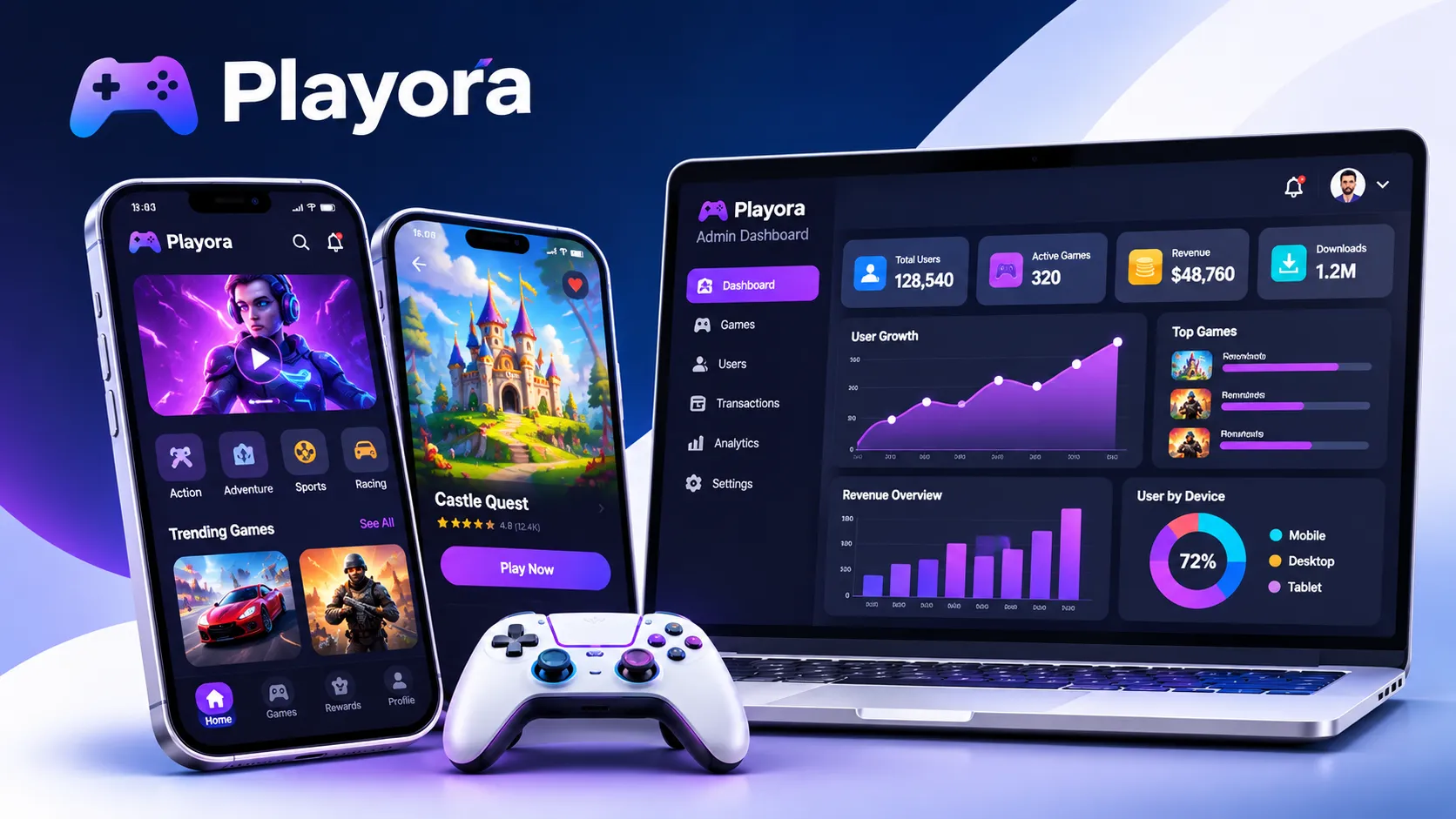
Playora
Challenge
A studio needed a first mobile title that could onboard quickly and keep a daily loop.
Solution
Playora wraps short sessions, rewards, and profiles so new players can start in minutes and return the next day.

Build mobile games that engage players through compelling gameplay, social features, and monetization mechanics. Our game development services connect design, development, testing, and live operations for mobile gaming businesses.
Tell us your gaming goals and first release.







MyCloudPulse develops mobile games for gaming studios, entertainment companies, and startups. We connect game design, development, backend services, multiplayer features, monetization, and analytics into complete game experiences designed around your target audience and platform.

From the portfolio
Explore mobile game experiences we have shaped for live ops, social play, and monetization. Each example shows how a concept becomes a session players come back to.
View Our WorkA studio needed a first mobile title that could onboard quickly and keep a daily loop.
Playora wraps short sessions, rewards, and profiles so new players can start in minutes and return the next day.
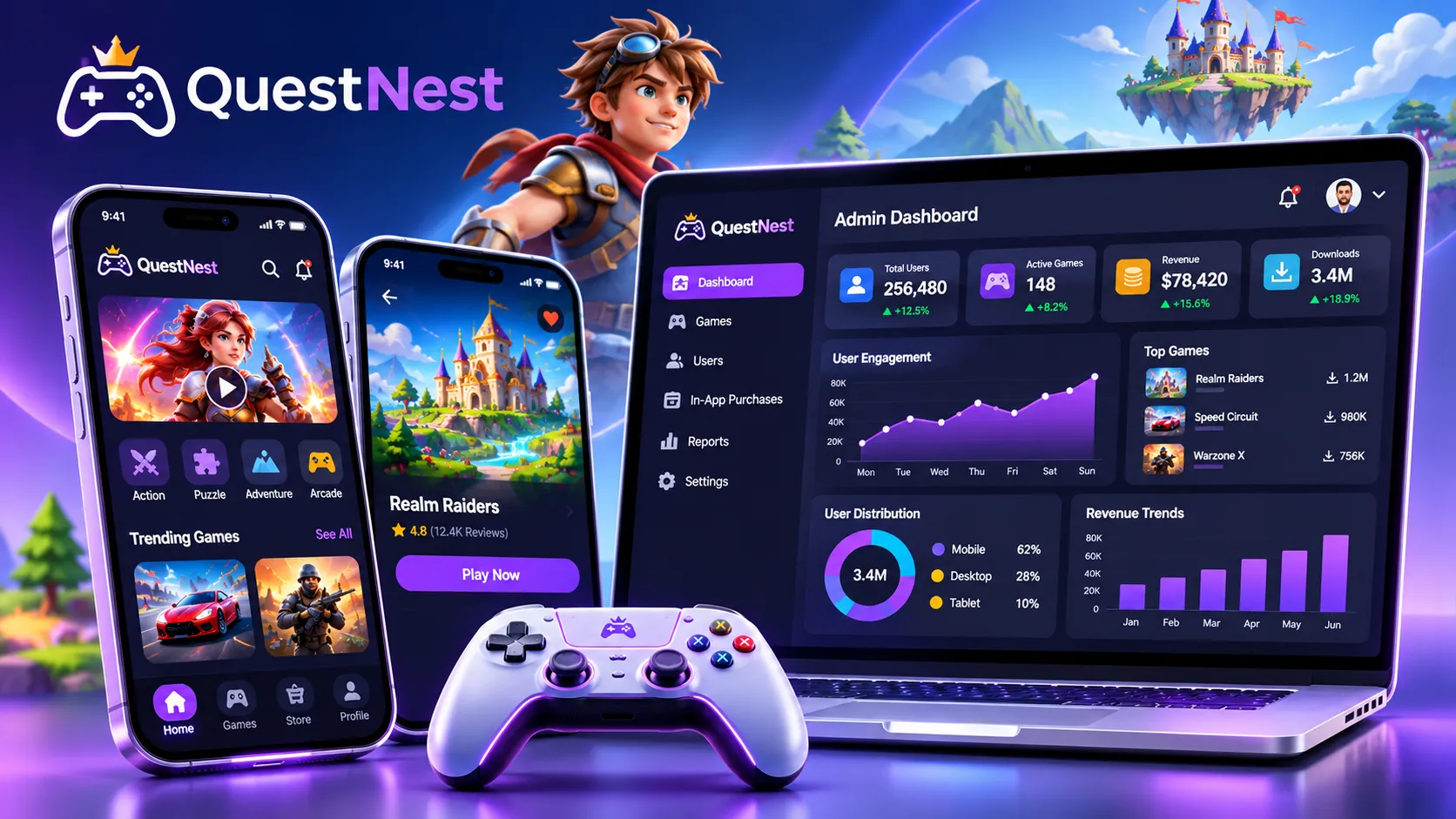
Players wanted co-op missions without a separate lobby app or unclear matchmaking.
QuestNest puts parties, missions, and progress in one client so friends can join and finish a run together.
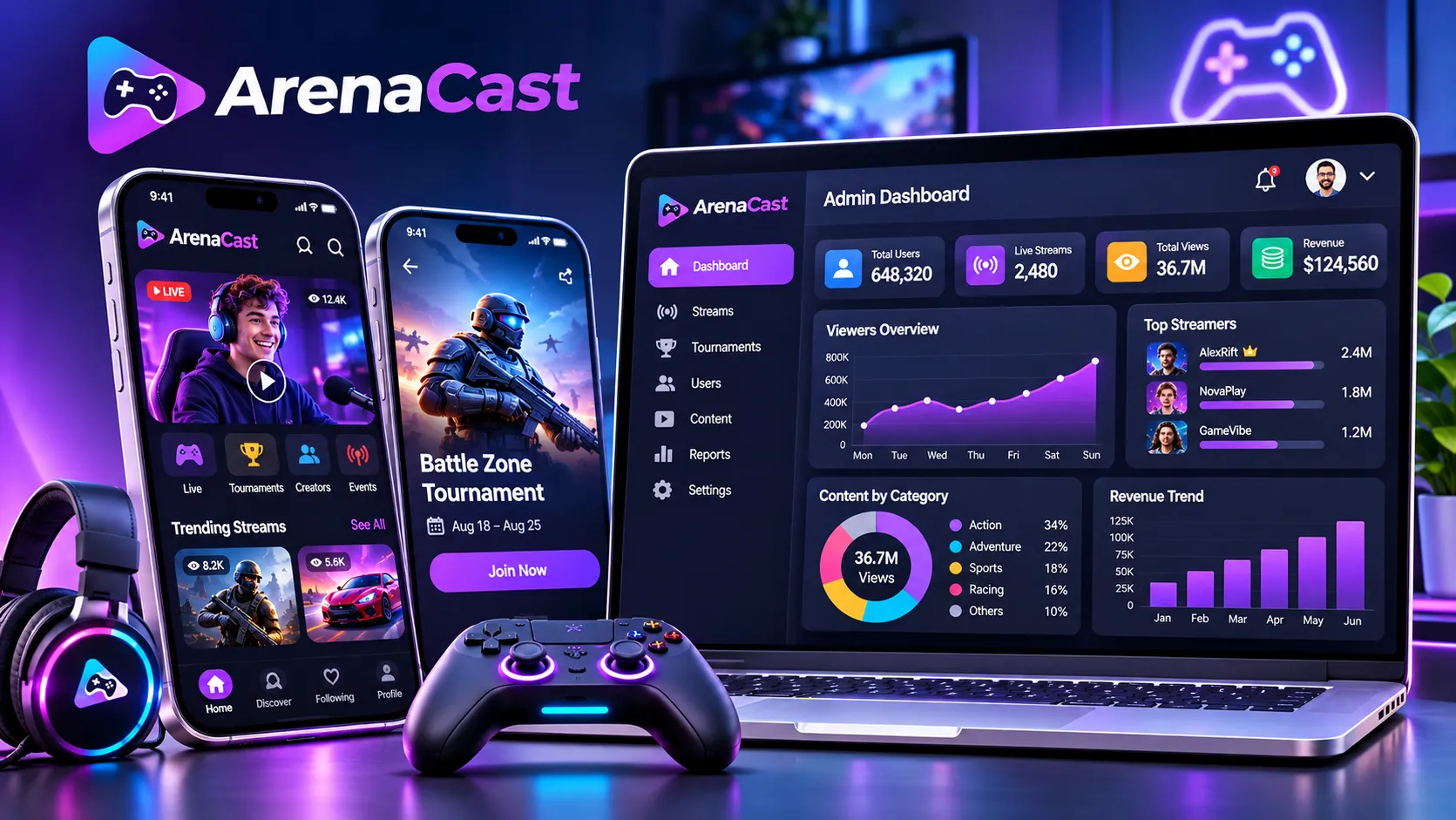
Live events needed brackets, spectating, and rewards without rebuilding the core game.
ArenaCast adds seasonal events and spectator views on top of the same match loop the game already uses.
Our services cover product planning, UI/UX design, development, integration, testing, deployment, and ongoing support. We shape the scope around your gameplay, players, monetization, and platform performance.
Define your game concept, target audience, core mechanics, art direction, and monetization strategy before development.
Build 2D and 3D games for iOS and Android with engaging gameplay, controls, animations, and visual effects.
Develop server infrastructure for player accounts, leaderboards, matchmaking, multiplayer sessions, and game data.
Design intuitive game interfaces, menus, HUD elements, and onboarding experiences that keep players engaged.
Build real-time and turn-based multiplayer experiences with matchmaking, chat, and competitive features.
Maintain games through updates, new content, events, bug fixes, and performance optimization.
We develop solutions for different gaming business models and operational needs, including:
Build accessible, easy-to-learn games with simple mechanics, short sessions, and broad audience appeal.
Develop games with deeper mechanics, progression systems, strategic decision-making, and problem-solving gameplay.
Create competitive or cooperative multiplayer experiences with matchmaking, rankings, and social features.
Build immersive worlds with character progression, storylines, resource management, and exploration.
Develop games designed for group play, social interaction, and shared entertainment experiences.
The core experience should help users complete important tasks with clear information, simple navigation, and access appropriate to their role.
Deliver engaging game mechanics, controls, visual feedback, and progression that keep players motivated.
Support player registration, profiles, achievements, statistics, and cross-device progress synchronization.
Track player scores, rankings, and competitive standings with global and friend-based leaderboards.

Enable friend lists, chat, team formation, gifting, and social sharing within the game experience.
Support virtual currency, item purchases, premium content, battle passes, and ad-based monetization.
A connected platform gives each user group the tools it needs while keeping shared information consistent across workflows.

Capabilities can include:
We prioritize practical capabilities that improve everyday workflows, coordination, and visibility across your gaming platform.
Give users access to the screens, actions, and records needed for their responsibilities, with clear permissions for shared workflows.
Reduce repeated data entry by connecting related records and activities across the platform and compatible external systems.
Provide relevant status updates, reminders, and exception alerts so users can follow progress and respond to outstanding work.
Help users find the information they need through relevant filters, organized records, and clear summaries.
Bring important activity and status information together in dashboards suited to the people managing the service.
Track usage and operational results through reports built around agreed metrics, available data, and business priorities.
Gaming platforms can hold personal, commercial, and operational information. We plan protection across user accounts, applications, APIs, integrations, and the underlying infrastructure.
Our approach includes secure authentication, role-based access, encrypted communication, protected storage, access logging, and security testing. Specific privacy and industry requirements are established during discovery.
The architecture is planned around expected usage and growth in users, records, transactions, and connected systems. Performance requirements and recovery needs guide infrastructure and deployment decisions.

We select the stack according to platform needs, existing systems, integration constraints, performance requirements, and maintainability.
 Flutter
 React NativeReact
 Node.js
 Python
 Java
 .NET
 PostgreSQL
 MySQL
 MongoDB
 AWS
 Microsoft Azure
 Google Cloud
 Unity
 Unreal Engine
We review your gameplay, players, monetization, and platform performance, existing systems, target users, and success measures, then define priorities and a practical delivery roadmap.
We design clear journeys and interfaces for the platform’s user groups, using prototypes to review key actions, information needs, and access controls.
Our team develops the agreed applications, business workflows, backend services, dashboards, and integrations, with reviews throughout implementation.
We test gameplay mechanics, multiplayer sessions, in-app purchases, leaderboard updates, and player account management, alongside usability, access permissions, performance, and integration behavior before release.
We prepare the release for the selected environments, validate configuration and data handling, and support deployment of the agreed product scope.
After launch, support can include bug fixes, compatibility updates, security improvements, integration maintenance, performance optimization, and further feature development.
Our solutions can be adapted for organizations such as:
The final platform is tailored to your gameplay, players, monetization, and platform performance, with features and integrations prioritized for the first release and future growth.
We build around your gameplay, players, monetization, and platform performance, connecting product decisions to the work your users need to complete.
We plan for growing usage, additional integrations, and evolving workflows so the product can develop alongside your business.
Our services connect discovery, design, development, testing, deployment, and ongoing improvements within a coordinated product lifecycle.
We consider the existing systems, data dependencies, and operational constraints that shape a useful gaming platform.
We tailor interfaces and workflows to your user groups, giving each role clear information and practical tools for everyday tasks.


The cost depends on the product scope, platforms, user roles, integrations, data requirements, and testing needs. We assess your gameplay, players, monetization, and platform performance before preparing an estimate, so the proposed investment reflects the actual work involved.
The timeline depends on the number of workflows, integration complexity, migration needs, and release priorities. A focused first release has a different scope from a complete platform. Planning establishes the delivery stages and dependencies before implementation.
Yes. We can shape the applications, user roles, workflows, and reporting around your gameplay, players, monetization, and platform performance. Discovery helps distinguish essential first-release features from capabilities that can follow as the product develops.
Yes. We can connect compatible systems through supported APIs and integration methods. Feasibility depends on provider access, data formats, permissions, and the workflows involved. We review these dependencies before committing to the integration scope.
Yes. Support can include maintenance, bug fixes, security updates, compatibility improvements, integration monitoring, performance optimization, and additional features. The scope is agreed around the product’s needs and the systems it depends on.
Discover what our clients have to say about working with MyCloudPulse and how our teams helped turn their digital ideas into reliable, scalable products.
“We returned to have them oversee and create the production version after they perfected it. They have a really talented, reliable, and fierce crew! The project was done and planned with great care, and they were able to be adaptable while meeting all deadlines.”

“CloudPulse successfully completed the project smoothly. We seamlessly incorporated every suggestion into the next revision. I wholeheartedly recommend CloudPulse to anyone in need of both iPad, iOS and Android app. Thank you once again!”

“CloudPulse helped us define key features, platform vision, and user experience goals. They suggested the best technologies and development roadmap for the platform. CloudPulse's developers built the core features while QA tested for smooth performance.”
“The team's manager deep dives into the spec and logic in order to understand the context and not just the need. This leads to better communication and better performance. Personal relationship - good and clean communication.”

“CloudPulse successfully developed a mobile app with e-commerce functionality that seamlessly connects to our current e-commerce web system. The application, built using Google's Flutter framework, ensures high performance on both iOS and Android platforms.”

“The scope of work involved designing a mobile application for digital wallet payments, featuring an intuitive interface for transferring funds, checking transaction history, and securely managing payment methods. Key deliverables included a fully functional app on both iOS and Android platforms.”