AR and VR Mobile App Development
Develop immersive experiences for compatible smartphones and tablets using camera capabilities, device sensors, motion tracking, spatial positioning, and interactive 3D content.

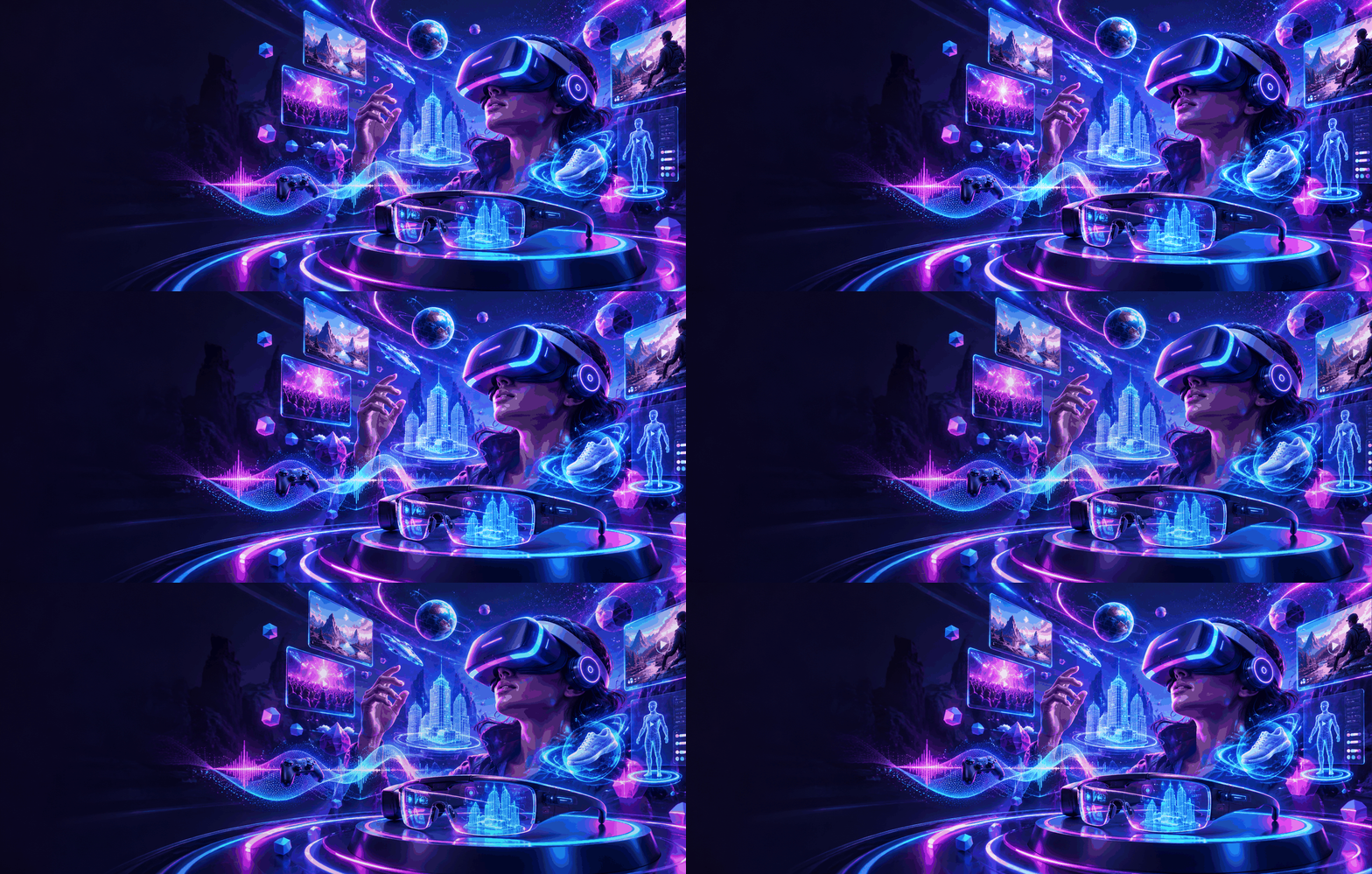
Create immersive digital experiences that help customers explore products, employees learn through simulation, teams collaborate remotely, and businesses visualize complex information.
Start Your AR/VR Development Project







MyCloudPulse provides AR and VR development services that help businesses create interactive product experiences, training environments, visualizations, simulations, and digital services.
Our approach focuses on practical use cases, combining immersive experience design with software engineering, suitable hardware, integrations, performance, and usability.

Develop immersive experiences for compatible smartphones and tablets using camera capabilities, device sensors, motion tracking, spatial positioning, and interactive 3D content.
Build immersive software around specific business processes, audiences, platforms, and technical requirements, including virtual environments, visualization tools, simulations, and enterprise applications.
Combine digital objects with physical environments using supported spatial mapping, environment understanding, hand tracking, and other device capabilities.
Connect immersive applications with compatible IoT devices, equipment, sensors, vehicles, and business systems to visualize relevant operational information.
Develop immersive gaming experiences incorporating environments, gameplay mechanics, animation, physics, spatial interaction, audio, and real-time rendering.
Create branded virtual environments, interactive product demonstrations, training simulations, virtual events, educational applications, onboarding experiences, and product configuration experiences.
Create optimized 3D models, animations, textures, environments, and interactive digital representations for AR, VR, and mixed reality applications.
Evaluate business use cases, technical feasibility, device requirements, platform selection, UX, architecture, integrations, security, and development roadmaps.
Maintain existing immersive applications through updates, issue resolution, device compatibility improvements, performance optimization, integration maintenance, and feature enhancements.
Allow customers to explore products within interactive virtual environments and understand product details and configurations.
Enable customers to view compatible 3D product models within their physical surroundings.
Create immersive property experiences that allow prospective buyers or tenants to explore properties remotely.
Develop controlled virtual environments where employees can practice defined tasks and workflows.
Provide technicians with relevant instructions, equipment information, and visual guidance through compatible AR devices.
Create digital environments where participants can interact, explore content, attend presentations, and collaborate remotely.
Turn suitable educational concepts into visual and interactive experiences that encourage exploration and participation.
Allow users to explore product options, materials, colors, components, and configurations through interactive visualization.
Connect virtual representations with relevant real-world information for equipment visualization, monitoring, and operational understanding.
Develop interactive product demonstrations, virtual experiences, branded environments, and customer-focused immersive campaigns.
AR and VR applications require attention to application security, user access, backend services, integrations, data protection, and the security of connected devices and platforms. Our development approach considers: Authentication and authorization User and permission management Application and API security Data protection Secure backend integrations Device and platform considerations Relevant security requirements Testing across supported devices Performance and stability validation Privacy and information-protection requirements For healthcare, aviation, safety-critical training, medical applications, or other regulated use cases, appropriate specialist validation and applicable regulatory review may be required.
We begin with the intended business outcome and the value the immersive experience should provide.
Features, interaction models, interfaces, platforms, and integrations are designed around the specific requirements of the application.
We consider navigation, interaction methods, readability, accessibility, comfort, and the intended user environment.
AR and VR applications can be connected with the digital services, APIs, cloud platforms, and backend systems required by the product.
Rendering, latency, tracking, device capabilities, and 3D asset optimization are considered throughout development.
Authentication, permissions, application security, and relevant data-protection requirements are considered according to the nature of the product.
Applications can be validated across relevant devices, workflows, environments, and performance requirements.
Support can continue after deployment through maintenance, compatibility updates, improvements, and future development.
Technology selection depends on the intended experience, hardware, rendering requirements, integrations, and project scope.
Use suitable AI capabilities for object recognition, intelligent assistance, and other immersive application requirements.
Identify supported physical objects and provide relevant digital information within AR experiences.
Introduce conversational or voice-enabled assistance for suitable immersive workflows.
Adjust appropriate training content according to defined user progress and performance indicators.
Connect compatible sensors, equipment, and connected systems with immersive interfaces.
Connect virtual representations with relevant physical-system information for visualization, monitoring, or analysis.
Enable multiple users to interact within shared immersive environments with synchronized experiences.
Connect AR and VR applications with suitable CRM, ERP, learning-management, content-management, IoT, and product-information systems.
Understand users, business objectives, project scope, functionality, target devices, and the desired immersive experience. We also evaluate whether AR, VR, or mixed reality is appropriate for the use case.
Define the experience, interaction model, supported hardware, application structure, 3D requirements, backend services, integrations, and technical architecture.
Create suitable wireframes, interaction concepts, spatial interfaces, visual assets, prototypes, and technical architecture while considering movement, field of view, navigation, controls, comfort, and accessibility.
Develop the immersive environment, application functionality, interactions, 3D content, device capabilities, backend services, and required integrations.
Test tracking, rendering, frame rate, responsiveness, navigation, usability, security, backend communication, device compatibility, and relevant user workflows.
Prepare the validated application for deployment on the selected platforms and supported devices.
Provide ongoing performance improvements, compatibility updates, issue resolution, content updates, new features, and application optimization.
AR and VR development services involve designing, developing, testing, deploying, and maintaining applications using augmented reality, virtual reality, or related immersive technologies.
AR places digital content within the physical environment, VR creates an immersive digital environment, and mixed reality allows suitable digital content to interact with the physical environment.
Yes. Mobile AR applications can be developed for Android and iOS using suitable frameworks and supported device capabilities.
No. Many AR applications can operate on compatible smartphones and tablets. Fully immersive VR applications generally require suitable VR hardware.
Yes. Immersive applications can connect with suitable CRM, ERP, learning-management, content-management, IoT, and other business systems through APIs and backend services.
Yes. Training applications can support employee onboarding, equipment familiarization, technical education, product training, and simulated workflows.
3D models provide the digital objects and environments users interact with. Models, textures, lighting, animation, and optimization influence both visual quality and performance.
It allows users to view suitable digital product models within their physical surroundings using a compatible device.
Yes. Suitable applications can provide shared virtual environments and synchronized interaction between multiple authorized users.
Performance optimization can involve rendering complexity, frame rate, latency, asset size, tracking, interaction responsiveness, and resource utilization, with testing on relevant devices.
Turn your AR, VR, or mixed reality idea into a practical digital product built around your users and business requirements.
Talk to Our AR/VR Experts ↗