DevOps Services and Solutions for Faster, Secure and Reliable Software Delivery

MyCloudPulse provides DevOps services and solutions that connect development, operations, quality assurance, security, and infrastructure within a connected software delivery environment. Our approach focuses on automation, reliable infrastructure, streamlined deployment workflows, monitoring, and continuous improvement.

Start Your DevOps Project
itvottCapital NumbersVeezpayBhagwant UniversityCareSys ProBoomFlix1R FMCirco
Built for business growth

DevOps Services and Solutions to Drive Business Growth

DevOps brings development and IT operations together through shared processes, automation, infrastructure practices, security integration, and continuous feedback. Instead of treating development, testing, deployment, infrastructure, and operations as separate activities, DevOps creates connected workflows across the software lifecycle.

MyCloudPulse helps organizations identify automation and modernization opportunities based on their application architecture, infrastructure, cloud environment, security requirements, team capabilities, and scalability objectives.

Our DevOps services can help businesses:

Automate repetitive development and operational activities

Establish CI/CD pipelines

Improve infrastructure consistency

Automate infrastructure provisioning

Implement Infrastructure as Code

Introduce containerized environments

Improve cloud infrastructure management

Integrate security into delivery workflows

Improve monitoring, logging, and observability

Support reliable application releases

Modernize legacy delivery environments

Continuously optimize DevOps processes

The exact implementation is adapted to the organization's technical environment and business requirements.

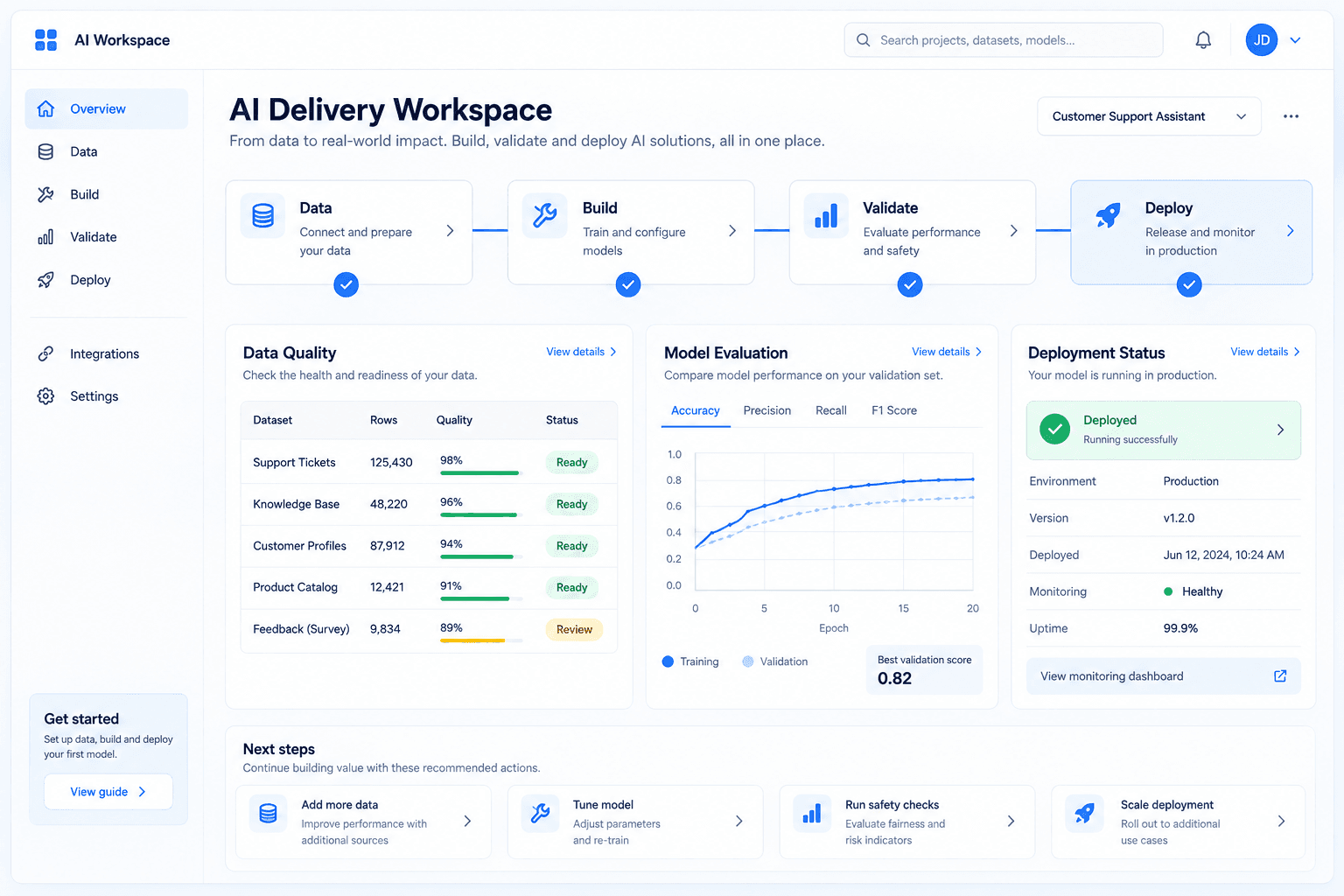
DevOps delivery operations with automated pipelines, observability, cloud infrastructure, and release controls
Our capabilities

Core DevOps Capabilities

DevOps Consulting and Strategy

We assess your development processes, infrastructure, deployment workflows, cloud environment, security practices, monitoring capabilities, and technology stack to identify DevOps opportunities.

Our consulting can cover:

  • Current environment assessment
  • DevOps maturity assessment
  • Strategy and roadmap development
  • Automation planning
  • CI/CD architecture
  • Cloud architecture planning
  • Infrastructure automation
  • Monitoring strategy
  • Toolchain selection
  • DevOps governance

DevOps Automation

We automate repetitive development and operational activities to reduce manual intervention and establish more consistent workflows.

Automation can cover:

  • Application builds
  • Software testing
  • Code quality checks
  • Infrastructure provisioning
  • Environment configuration
  • Application deployment
  • Security checks
  • Monitoring and alerts
  • Backup processes
  • Scaling workflows
  • Release processes

CI/CD Implementation

We design and implement Continuous Integration and Continuous Delivery/Deployment pipelines that automate software validation and release workflows.

A pipeline can include source control, automated builds, code analysis, testing, security validation, artifact generation, staging deployment, release approval, production deployment, and monitoring.

Infrastructure as Code

Infrastructure as Code enables infrastructure to be provisioned and managed through configuration files rather than relying entirely on manual setup.

Our IaC services can support:

  • Cloud resource provisioning
  • Network configuration
  • Server configuration
  • Environment creation
  • Infrastructure versioning
  • Repeatable deployments
  • Infrastructure scaling
  • Disaster recovery preparation

Containerization and Kubernetes

We help organizations containerize applications to create portable and consistent deployment environments.

Services can include:

  • Kubernetes architecture
  • Cluster configuration
  • Workload deployment
  • Container scaling
  • Service configuration
  • Monitoring and logging
  • Security
  • CI/CD integration

Microservices DevOps

Microservices environments require independent deployments, service-level monitoring, centralized logging, infrastructure automation, configuration management, and scalable infrastructure.

Our DevOps practices support distributed environments through automated pipelines, containers, monitoring, logging, and infrastructure management.

DevSecOps

Security can be integrated throughout development, CI/CD, infrastructure, cloud environments, and application delivery.

DevSecOps capabilities include:

  • Source-code analysis
  • Dependency scanning
  • Container scanning
  • Infrastructure checks
  • Secret detection
  • Security testing
  • Policy validation
  • Compliance checks
  • Cloud infrastructure security assessment
  • Security monitoring

Monitoring, Logging and Observability

We provide operational visibility across infrastructure, applications, services, and system behavior through:

  • Infrastructure monitoring
  • Application monitoring
  • Centralized logging
  • Alert management
  • Metrics
  • Logs
  • Traces
  • Observability

Site Reliability Engineering

Our SRE-oriented services focus on system reliability, scalability, monitoring, automation, incident management, performance optimization, and capacity planning.

Managed DevOps Services

For organizations requiring ongoing support, managed DevOps can cover:

  • CI/CD pipelines
  • Cloud infrastructure
  • Infrastructure monitoring
  • Troubleshooting
  • Automation
  • Performance
  • Reliability
  • Security
  • Continuous optimization
Our capabilities

DevOps Solutions for Different Business Needs

Cloud DevOps

Cloud DevOps combines cloud infrastructure with automated software delivery. Services can include cloud infrastructure automation, cloud-based CI/CD, cloud migration support, multi-cloud and hybrid DevOps, monitoring, security, and resource optimization.

Mobile Application DevOps

DevOps practices can support mobile application development through automated builds, testing, backend deployments, environment management, and selected release activities.

Web Application DevOps

Web applications can benefit from automated build and deployment workflows, infrastructure automation, testing, monitoring, security integration, and continuous delivery.

Enterprise DevOps

Enterprise environments can require:

  • Standardized CI/CD
  • Multi-team workflows
  • Infrastructure governance
  • Security controls
  • Cloud management
  • Monitoring and observability
  • Container orchestration
  • Release management
  • Legacy modernization
  • DevOps governance

Microservices DevOps

Microservices environments can be supported through containerization, automated pipelines, service-level monitoring, centralized logging, infrastructure automation, and scalable infrastructure.

DevSecOps

DevSecOps integrates security controls and validation into development, testing, infrastructure, and deployment workflows.

Managed DevOps

Managed DevOps provides ongoing support for defined pipelines, infrastructure, monitoring environments, automation processes, security activities, and optimization requirements.

Industries We Serve

DevOps requirements vary by industry because applications have different security, compliance, availability, performance, scalability, and operational requirements.

Secure by design

Security, Compliance & Quality

Security can be incorporated throughout the software delivery lifecycle rather than being introduced only at the final stage.

Security Integration

DevSecOps practices can integrate security into development, CI/CD, infrastructure management, and deployment workflows.

Code & Dependency Security

Security validation can include source-code analysis, dependency scanning, secret detection, and automated security testing.

Container & Infrastructure Security

Container scanning and infrastructure security checks can be incorporated into delivery and infrastructure workflows.

Policy & Compliance Validation

Security policies and compliance checks can be integrated into appropriate DevOps workflows.

Monitoring & Operational Visibility

Monitoring, logging, alerts, and observability help teams identify operational issues and understand application and infrastructure behavior.

Quality & Release Validation

Automated testing, pipeline validation, deployment checks, and structured release processes can support software quality and reliable delivery.

Built for what’s next

Why Choose MyCloudPulse for DevOps?

End-to-End DevOps Expertise

We support the DevOps lifecycle from assessment and strategy through implementation, automation, monitoring, and ongoing optimization.

Customized DevOps Solutions

DevOps environments are developed around your applications, infrastructure, team structure, cloud environment, and business objectives.

Cloud and Infrastructure Expertise

Our approach can support cloud, containerized, hybrid, and traditional infrastructure requirements.

Security-Focused Approach

Security considerations can be integrated throughout development and infrastructure workflows.

Automation-First Engineering

We identify repetitive activities that can be automated to improve consistency and reduce manual work.

Scalable Architecture

DevOps environments are designed with application and infrastructure growth in mind.

Continuous Monitoring

Monitoring, logging, and observability provide visibility into application and infrastructure behavior.

Continuous Improvement

DevOps is treated as an ongoing engineering practice that evolves with applications and business requirements.

Technology ecosystem

Technologies & Tech Stack

The technology stack is selected according to application architecture, infrastructure requirements, cloud environment, development processes, and business objectives rather than applying the same tools to every organization.

Containerization & Orchestration

  • Docker
  • Kubernetes
  • OpenShift
  • Podman
  • Docker Swarm

Infrastructure as Code & Automation

  • Terraform
  • Ansible
  • Puppet
  • Chef
  • Pulumi
  • AWS CloudFormation
  • Azure Resource Manager

CI/CD

  • Jenkins
  • GitHub Actions
  • GitLab CI/CD
  • Azure DevOps
  • CircleCI
  • Bitbucket Pipelines
  • AWS CodePipeline
  • AWS CodeBuild
  • AWS CodeDeploy
  • Google Cloud Build

Monitoring & Observability

  • Prometheus
  • Grafana
  • Datadog
  • Nagios
  • Zabbix
  • Elastic Stack
  • Kibana
  • Fluentd

Testing

  • Selenium
  • Appium
  • Postman
  • JMeter
  • Cypress
  • Playwright

Scripting & Automation

  • Bash
  • PowerShell
  • Python
  • Go
  • YAML

Cloud Platforms

  • Amazon Web Services
  • Microsoft Azure
  • Google Cloud Platform
  • DigitalOcean

Databases & Data Platforms

The final technology stack is selected according to actual project requirements rather than applying the same tools to every organization.

  • MySQL
  • PostgreSQL
  • MongoDB
  • SQL Server
  • Oracle
  • Cassandra
Technology ecosystem

Advanced & Emerging Technologies

Cloud-Native Infrastructure

Cloud platforms, containers, Infrastructure as Code, and automated scaling can support scalable and repeatable infrastructure environments.

    Container Orchestration

    Kubernetes and related orchestration technologies can support deployment, scaling, networking, service discovery, monitoring, and security across containerized environments.

      Infrastructure as Code

      IaC supports repeatable, version-controlled infrastructure provisioning and configuration.

        DevSecOps Automation

        Security checks can be integrated into CI/CD and infrastructure workflows to provide earlier feedback about potential risks.

          Observability

          Metrics, logs, traces, monitoring, and alerts can provide deeper visibility into complex application and infrastructure environments.

            Site Reliability Engineering

            SRE applies software engineering principles to reliability, scalability, monitoring, automation, incident management, performance, and capacity planning.

              Continuous Delivery

              Automated validation, packaging, deployment, monitoring, and release workflows support continuous software delivery.

                A clear path to production

                Our DevOps Process

                01

                Discovery & Requirements

                We analyze the existing application architecture, infrastructure, cloud environment, development workflows, deployment processes, testing practices, security, monitoring, tools, and operational challenges.

                02

                Strategy & Planning

                We identify DevOps opportunities and create a practical roadmap covering implementation priorities, architecture, technologies, automation opportunities, and expected outcomes.

                03

                Architecture & Design

                We define the appropriate DevOps architecture, technology stack, infrastructure approach, CI/CD design, cloud environment, automation strategy, and monitoring requirements.

                04

                Development / Implementation

                We implement infrastructure automation, CI/CD pipelines, containerization, configuration management, cloud environments, and other required DevOps capabilities.

                05

                Testing & Quality Assurance

                Automated testing, security validation, pipeline validation, deployment checks, and operational requirements are incorporated according to project needs.

                06

                Deployment & Launch

                The DevOps environment is deployed and validated against defined technical and operational requirements.

                07

                Support & Optimization

                After implementation, we monitor and continuously improve pipelines, infrastructure, security, performance, reliability, observability, and operational processes.

                Frequently asked questions

                What to know before starting.

                Start a conversation
                What Are DevOps Services?

                DevOps services help organizations improve collaboration between development and IT operations while automating software building, testing, deployment, infrastructure management, monitoring, and security.

                What DevOps Services Does MyCloudPulse Provide?

                Services can include DevOps consulting, CI/CD implementation, Cloud DevOps, Infrastructure as Code, infrastructure automation, containerization, Kubernetes, DevSecOps, monitoring and observability, SRE, managed DevOps, and modernization.

                What Is CI/CD in DevOps?

                CI/CD refers to Continuous Integration and Continuous Delivery or Deployment. It helps automate software integration, testing, validation, packaging, and release processes.

                What Is Infrastructure as Code?

                Infrastructure as Code defines and manages infrastructure through code or configuration files, making infrastructure more repeatable, version-controlled, and easier to automate.

                What Is DevSecOps?

                DevSecOps integrates security practices into DevOps workflows so security is considered throughout development, testing, infrastructure management, and deployment.

                Can You Implement DevOps for an Existing Application?

                Yes. Existing applications can be assessed for CI/CD, cloud adoption, containerization, infrastructure automation, monitoring, security integration, and other DevOps improvements.

                Can DevOps Be Used for Mobile Applications?

                Yes. DevOps practices can automate mobile builds, testing, backend deployments, environment management, and selected release activities.

                Can You Help With Cloud DevOps?

                Yes. Cloud DevOps can include cloud infrastructure automation, CI/CD, monitoring, security, containerization, Infrastructure as Code, migration support, and optimization.

                Do You Provide Kubernetes Services?

                Yes. Kubernetes services can include architecture, cluster setup, application deployment, CI/CD integration, monitoring, security, and ongoing optimization depending on project requirements.

                How Do You Choose DevOps Tools?

                Tools are selected according to application architecture, existing technology stack, cloud environment, team capabilities, security requirements, deployment requirements, scalability, integration requirements, operational complexity, and budget.

                How Long Does DevOps Implementation Take?

                The timeline depends on existing infrastructure, application complexity, number of environments, automation requirements, cloud architecture, security requirements, and overall project scope.

                How Much Do DevOps Services Cost?

                Cost depends on project scope, infrastructure complexity, cloud requirements, automation needs, technology stack, engagement model, support requirements, and implementation timeline.

                Ready for what’s next?

                Start Your DevOps Transformation with MyCloudPulse

                Modern software teams need connected processes for building, testing, deploying, securing, monitoring, and continuously improving digital products.

                MyCloudPulse provides DevOps services and solutions designed to connect development and operations while creating automated, scalable, secure, and reliable software delivery environments.

                Talk to Our DevOps Experts