Telemedicine has revolutionized the healthcare industry by enabling patients and doctors to connect remotely through digital platforms. In 2026, telemedicine is no longer just a convenience—it has become a core component of modern healthcare delivery. From virtual consultations to remote patient monitoring, telemedicine apps are transforming how healthcare services are accessed and delivered. Understanding the Telemedicine App Development Cost 2026 is essential for businesses and healthcare providers looking to build scalable, secure, and user-friendly digital health solutions in this rapidly evolving landscape.
The growing demand for digital healthcare solutions is driven by factors such as increased smartphone usage, rising healthcare costs, and the need for accessible care in remote areas. Businesses, hospitals, and startups are investing heavily in telemedicine platforms to improve patient outcomes and operational efficiency.
However, building a telemedicine app is not as simple as developing a standard mobile application. It requires secure infrastructure, compliance with healthcare regulations (like HIPAA/GDPR), real-time communication features, and seamless integration with healthcare systems.
Understanding the telemedicine app development cost, features, and process is essential for businesses planning to enter this space. This guide provides a comprehensive overview to help you make informed decisions.
Market Stats
The telemedicine industry has witnessed exponential growth over the past few years and continues to expand rapidly in 2026. Driven by digital transformation in healthcare, increasing smartphone penetration, and demand for remote care, telemedicine is now a key pillar of modern healthcare systems worldwide.
📊 Global Market Size & Growth
- The global telemedicine market is projected to reach approximately $298–$300 billion by 2028, growing at a CAGR of over 18–20%
- By 2030, the market is expected to surpass $380 billion, reflecting sustained long-term growth
- North America currently dominates the market, while Asia-Pacific is emerging as the fastest-growing region due to increased digital healthcare adoption
👉 Key Insight:
Telemedicine is evolving from a supplementary service to a mainstream healthcare solution.
📈 Adoption & Usage Trends
- Over 70% of healthcare providers now offer some form of telehealth services
- Around 75% of patients prefer virtual consultations for non-emergency conditions
- Mobile health (mHealth) apps account for a significant portion of telemedicine usage, driven by smartphone accessibility
👉 Key Insight:
Both providers and patients are increasingly embracing telemedicine for convenience and efficiency.
💰 Business & Investment Trends
- Venture capital investments in digital health and telemedicine continue to grow steadily
- Hospitals and healthcare startups are investing heavily in AI-powered telemedicine platforms
- Remote patient monitoring (RPM) solutions are gaining traction, especially for chronic disease management
👉 Key Insight:
Strong investment activity indicates high profitability and future scalability.
🎯 Final Insight
The market statistics clearly highlight that telemedicine is no longer a niche service—it is becoming an essential component of global healthcare infrastructure, offering vast opportunities for innovation and business growth.
Core Features of Telemedicine App Development Cost
A successful telemedicine app must include a set of core features that ensure seamless communication between patients and healthcare providers while maintaining security, usability, and efficiency. These features form the foundation of any reliable telehealth platform.
👤 User Registration & Profile Management
Telemedicine apps should offer secure and simple onboarding for both patients and doctors.
Key functionalities:
- Sign-up via email, phone, or social login
- Profile creation with medical history and credentials
- Role-based dashboards for patients and healthcare providers
👉 This ensures personalized and secure user experiences.
📅 Appointment Scheduling & Management
Scheduling is a critical feature that streamlines the consultation process.

Capabilities include:
- Real-time doctor availability
- Easy booking, rescheduling, and cancellations
- Automated reminders and notifications
👉 Improves convenience and reduces missed appointments.
📞 Video & Audio Consultation
This is the core functionality of any telemedicine platform.
Features include:
- High-quality video and audio calls
- Low-latency, real-time communication
- Multi-device compatibility
👉 Enables remote diagnosis and consultation effectively.
💬 In-App Chat & Messaging
Secure messaging allows patients and doctors to communicate outside live sessions.
Key features:
- Text-based chat
- File sharing (reports, prescriptions)
- End-to-end encryption
👉 Enhances continuous communication and follow-ups.
💳 Payment & Billing Integration
A seamless payment system ensures smooth transactions.
Includes:
- Multiple payment options (cards, wallets, UPI)
- Automated billing and invoicing
- Secure transaction processing
👉 Simplifies financial interactions.
📁 Electronic Health Records (EHR) Integration
EHR integration is essential for storing and accessing patient data.
Capabilities:
- Digital medical records
- Easy access to history and prescriptions
- Secure data storage
👉 Helps doctors make informed decisions quickly.
🔔 Notifications & Alerts
Timely updates keep users informed and engaged.
Examples:
- Appointment reminders
- Prescription alerts
- Health notifications
👉 Improves user engagement and adherence to treatment.
🎯 Final Insight
Core features such as video consultations, scheduling, secure messaging, payments, and EHR integration form the backbone of telemedicine apps. By implementing these effectively, businesses can create user-friendly, secure, and efficient healthcare solutions that meet modern patient needs.
Advanced Features of Telemedicine App Development Cost
To stay competitive in 2026, telemedicine apps must go beyond basic functionality and incorporate advanced features that enhance user experience, improve healthcare outcomes, and enable intelligent decision-making. These features transform a standard telehealth app into a next-generation digital healthcare platform.
🤖 AI-Powered Diagnosis & Chatbots
Artificial Intelligence plays a crucial role in modern telemedicine.
Key capabilities:
- Symptom analysis and preliminary diagnosis
- AI chatbots for instant patient support
- Personalized treatment recommendations
👉 Reduces doctor workload and improves response time.
📡 Remote Patient Monitoring (RPM)
RPM allows doctors to monitor patients’ health in real time using connected devices.
Features include:
- Integration with wearables (smartwatches, fitness trackers)
- Tracking vital signs like heart rate, blood pressure, and glucose levels
- Continuous health monitoring for chronic conditions
👉 Enhances proactive care and early diagnosis.
🧠 Predictive Analytics
Advanced analytics tools help in forecasting health risks and trends.
Benefits:
- Early detection of potential health issues
- Data-driven treatment plans
- Improved patient outcomes
👉 Supports smarter clinical decisions.
🔐 Advanced Security & Compliance
Given the sensitivity of healthcare data, advanced security is essential.
Includes:
- Multi-factor authentication (MFA)
- End-to-end encryption
- Compliance with HIPAA, GDPR, and other regulations
👉 Ensures patient data privacy and trust.
🌐 Multi-Language & Accessibility Support
To reach a broader audience, telemedicine apps must be inclusive.
Features:
- Multi-language interfaces
- Accessibility options for differently-abled users
👉 Expands reach and improves usability.
🎯 Final Insight
Advanced features like AI integration, remote monitoring, predictive analytics, and enhanced security elevate telemedicine apps to a higher level. These innovations not only improve patient care but also provide a competitive edge in the rapidly evolving digital healthcare landscape.
Development Process of Telemedicine App Development Cost
Developing a telemedicine app requires a structured and compliance-driven approach to ensure security, scalability, and seamless user experience. Since healthcare applications deal with sensitive patient data, every stage of development must follow strict standards and best practices.
🔍 Step 1: Requirement Analysis & Planning
The process begins with identifying business goals, target audience, and core functionalities.
Key activities:
- Define use cases (consultation, monitoring, e-prescriptions)
- Analyze regulatory requirements (HIPAA, GDPR)
- Outline technical and business specifications
👉 This step ensures clarity and proper planning.
🎨 Step 2: UI/UX Design
A user-friendly interface is essential for both patients and healthcare providers.
Includes:
- Wireframing and prototyping
- Designing intuitive dashboards
- Ensuring accessibility and ease of navigation
👉 Improves user engagement and adoption.
💻 Step 3: App Development
This phase involves building the frontend, backend, and core functionalities.
Key tasks:
- Video/audio integration for consultations
- API development for system connectivity
- Database setup for storing patient records
👉 Forms the foundation of the app.
🔗 Step 4: Integration
The app is integrated with external systems and tools.
Examples:
- Payment gateways
- Electronic Health Records (EHR)
- Wearable devices and IoT
👉 Enhances functionality and usability.
🧪 Step 5: Testing & Quality Assurance
Testing ensures the app is secure and reliable.
Types of testing:
- Functional testing
- Security testing
- Performance testing
👉 Prevents errors and ensures compliance.
🚀 Step 6: Deployment & Launch
The app is deployed on app stores or cloud platforms.
Includes:
- Final deployment
- Performance monitoring
- User onboarding
👉 Marks the official launch.
📈 Step 7: Maintenance & Updates
Continuous updates are essential for long-term success.
Includes:
- Bug fixes
- Feature enhancements
- Security updates
👉 Keeps the app efficient and up-to-date.
🎯 Final Insight
A well-defined development process ensures that telemedicine apps are secure, scalable, and user-friendly, enabling businesses to deliver high-quality digital healthcare solutions.
Required Team Structure
Developing a telemedicine app requires a cross-functional team with expertise in healthcare, software development, and data security. Since telemedicine platforms handle sensitive patient data and real-time communication, having the right team is essential for building a secure and scalable solution.
👨💼 Product Manager
The Product Manager oversees the entire project and ensures alignment with business goals.
Responsibilities:
- Define product vision and roadmap
- Coordinate between teams
- Manage timelines and deliverables
👉 Ensures the project stays on track.
📊 Business Analyst
The Business Analyst translates healthcare requirements into technical specifications.
Responsibilities:
- Gather and document requirements
- Identify key features and workflows
- Ensure compliance with healthcare standards
👉 Bridges the gap between business and technology.
💻 Developers (Frontend & Backend)
Developers are responsible for building the application.
Responsibilities:
- Develop user interfaces and dashboards
- Build backend systems and APIs
- Integrate video calling and payment systems
👉 Core contributors to app functionality.
🎨 UI/UX Designer
Designers create intuitive and user-friendly interfaces.
Responsibilities:
- Design wireframes and prototypes
- Improve usability and accessibility
- Ensure smooth user experience
👉 Enhances user engagement.
🔐 Security & Compliance Expert
Security specialists ensure data protection and regulatory compliance.
Responsibilities:
- Implement encryption and secure authentication
- Ensure HIPAA/GDPR compliance
- Conduct security audits
👉 Protects sensitive healthcare data.
🧪 QA Engineer
QA engineers ensure the app is reliable and bug-free.
Responsibilities:
- Perform testing and validation
- Identify and fix issues
- Ensure performance across devices
👉 Maintains quality and stability.
⚙️ DevOps Engineer
Handles deployment and infrastructure management.
Responsibilities:
- Manage cloud infrastructure
- Implement CI/CD pipelines
- Monitor app performance
👉 Ensures smooth deployment and scalability.
🎯 Final Insight
A well-structured team with specialized roles ensures the development of a secure, compliant, and high-performing telemedicine app, enabling long-term success in the digital healthcare market.
Monetization Methods of Telemedicine App Development Cost
Telemedicine apps offer diverse monetization opportunities by combining healthcare service fees with digital business models. A well-planned strategy helps generate consistent revenue while delivering value to both patients and healthcare providers.
💰 Subscription Model
Many telemedicine platforms adopt a subscription-based approach for patients and providers.
Includes:
- Monthly or yearly plans
- Access to unlimited or discounted consultations
- Premium features like priority appointments
👉 Provides predictable recurring revenue.
📦 Pay-Per-Consultation
This is one of the most common revenue models in telemedicine.
Examples:
- Charges per video or audio consultation
- Pricing varies based on doctor specialization
👉 Ensures revenue based on platform usage.
💊 E-Pharmacy & Commission
Telemedicine apps can integrate online pharmacies to generate additional income.
Revenue streams:
- Commission on medicine purchases
- Partnerships with pharmacies
👉 Creates an extended healthcare ecosystem.
📊 Premium Features & Services
Advanced features can be offered as paid add-ons.
Includes:
- AI-based health insights
- Detailed reports and analytics
- Remote monitoring services
👉 Increases average revenue per user (ARPU).
🏥 Enterprise Solutions
Telemedicine platforms can offer customized solutions to hospitals and clinics.
Includes:
- White-label apps
- Custom integrations
- Licensing and support services
👉 Generates high-value contracts and long-term partnerships.
🌐 Advertising & Partnerships
Non-intrusive ads and collaborations can provide additional revenue.
Examples:
- Sponsored healthcare content
- Partnerships with insurance companies
👉 Adds supplementary income streams.
🎯 Final Insight
A mix of subscription plans, consultation fees, pharmacy commissions, and enterprise solutions creates a balanced monetization strategy. By aligning revenue models with user needs, telemedicine platforms can achieve sustainable growth and profitability in a competitive healthcare market.
Telemedicine App Development Cost
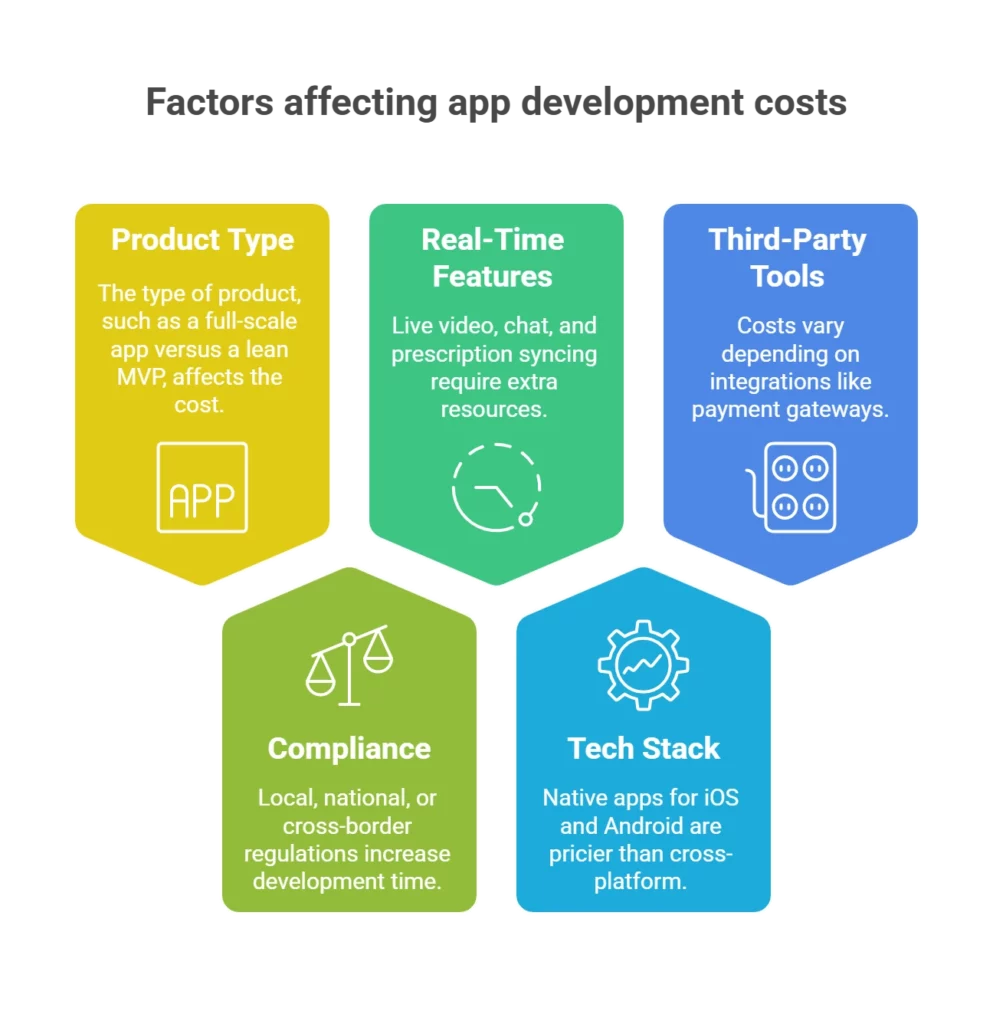
The cost of developing a telemedicine app depends on multiple factors such as feature complexity, compliance requirements, platform selection, and integrations. Since healthcare applications require high security and regulatory compliance, costs are generally higher than standard mobile apps.
💸 Cost Breakdown
- Basic MVP (Minimum Viable Product): $40,000 – $80,000
Includes essential features like user registration, appointment scheduling, video consultations, and basic payment integration. Ideal for startups testing the market. - Mid-Level App: $80,000 – $150,000
Adds features such as EHR integration, advanced UI/UX, chat functionality, notifications, and improved security measures. - Enterprise-Level App: $150,000 – $350,000+
Includes AI-powered diagnosis, remote patient monitoring, advanced analytics, multi-device support, and enterprise-grade security and compliance.
⏱️ Development Timeline
- MVP: 3–5 months
- Mid-Level App: 5–8 months
- Enterprise Solution: 8–12+ months
📊 Key Cost Factors
Several elements influence the overall development cost:
- Feature Set: Advanced features like AI and IoT significantly increase costs
- Compliance Requirements: HIPAA, GDPR, and other regulations require additional development and security measures
- Platform Choice: Native (iOS/Android) vs cross-platform development
- Third-Party Integrations: EHR systems, payment gateways, and wearable devices
- UI/UX Complexity: High-quality design increases development time and cost
💡 Ongoing Costs
Beyond initial development, businesses should consider:
- Cloud hosting and infrastructure
- App maintenance and updates
- Security monitoring and compliance audits
🎯 Final Insight
Although telemedicine app development requires a significant investment, the long-term benefits—such as improved patient access, operational efficiency, and scalable revenue opportunities—make it a highly valuable and future-proof business decision.

Conclusion
Telemedicine is no longer a niche innovation—it has become a fundamental part of modern healthcare delivery. As patients increasingly demand convenient, accessible, and cost-effective medical services, telemedicine apps are bridging the gap between healthcare providers and users through digital platforms. From virtual consultations to remote patient monitoring, these solutions are transforming how care is delivered and experienced.
Developing a telemedicine app requires careful planning, the right technology stack, and strict adherence to security and compliance standards such as HIPAA and GDPR. While the initial investment may seem substantial, the long-term benefits—including improved patient engagement, reduced operational costs, and scalable revenue streams—make it a strategic and future-ready investment.
Moreover, the integration of advanced technologies like AI, wearable devices, and predictive analytics is further enhancing the capabilities of telemedicine platforms, enabling more personalized and proactive healthcare services. Businesses that adopt these innovations can gain a strong competitive advantage in a rapidly evolving market.
As the global telemedicine market continues to grow, organizations that invest in robust, user-friendly, and secure applications will be well-positioned to lead the digital healthcare revolution. By focusing on the right features, development approach, and monetization strategy, companies can build successful telemedicine solutions that deliver value to both patients and providers.
FAQs
It ranges from $40,000 to $300,000+ depending on features and complexity.
Typically, 3–12 months depending on scope.
Video consultation, appointment scheduling, chat, EHR, and payment integration.
Due to compliance requirements, integrations, and security features.
Yes, it offers multiple revenue streams and high market growth potential.