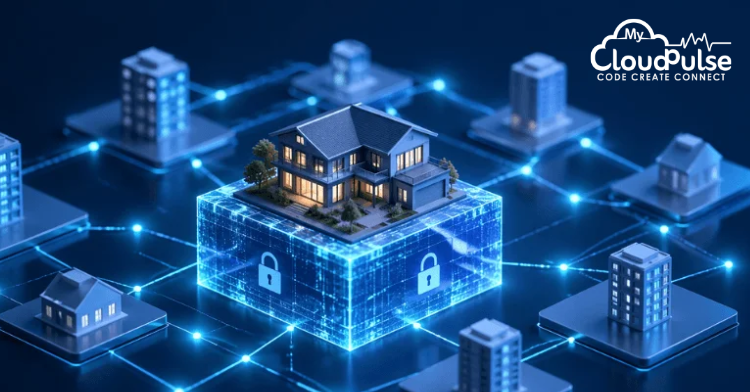
The real estate industry has long been associated with complex processes, high transaction costs, and a lack of transparency. From property registration and ownership transfer to financing and asset management, traditional systems often involve multiple intermediaries, extensive paperwork, and delays. Blockchain in Real Estate is emerging as a transformative solution to these challenges by enabling secure, transparent, and decentralized transactions. By eliminating intermediaries, reducing fraud, and streamlining processes, blockchain technology is redefining how property transactions are conducted in the modern digital landscape.
With the emergence of blockchain technology, the industry is undergoing a significant transformation. Blockchain introduces a decentralized, secure, and transparent digital ledger that can streamline transactions, reduce fraud, and eliminate inefficiencies. In recent years, real estate companies, investors, and governments have started exploring blockchain to modernize operations and improve trust among stakeholders.
Blockchain in real estate is no longer just a theoretical concept—it is being actively used for property transactions, tokenization, smart contracts, and digital identity verification. By enabling direct peer-to-peer transactions and tamper-proof records, blockchain is redefining how properties are bought, sold, and managed.
This blog explores the benefits, use cases, development process, cost, and key features of blockchain in real estate, helping businesses understand how to leverage this transformative technology.
Market Stats
The adoption of blockchain in real estate is accelerating as the industry shifts toward digital transformation, transparency, and global accessibility. While still in its growth phase, the market shows strong momentum driven by tokenization, proptech innovation, and institutional interest.
📊 Global Market Size & Growth
- The blockchain in real estate market is estimated at around $2.5 billion in 2026 and is projected to reach approximately $5.05 billion by 2032, growing at a CAGR of 11.75%
- The broader PropTech market, which includes blockchain solutions, is valued at $54.66 billion in 2026 and is expected to grow to $185+ billion by 2034, with a CAGR of 16.4%
👉 Key Insight:
Blockchain is becoming a core component of the rapidly expanding digital real estate ecosystem.
💰 Tokenization Market Trends
- Real estate tokenization is gaining massive traction, with projections suggesting up to $1.4 trillion in tokenized real estate by 2026
- The total value of tokenized real estate assets reached around $3.7 billion in 2025, showing rapid year-over-year growth
- The broader real-world asset (RWA) ecosystem, including real estate, has already crossed $2 trillion in value by early 2026
👉 Key Insight:
Tokenization is unlocking liquidity and enabling fractional ownership, making real estate more accessible globally.
📈 Adoption & Industry Trends
- Over 800+ active blockchain-based real estate solutions are currently in operation, reflecting consistent innovation and adoption
- The sector has experienced double-digit annual growth (13% YoY) in blockchain adoption within real estate applications
- Blockchain adoption in real estate grew by approximately 340% between 2024 and 2026, highlighting rapid market acceleration
👉 Key Insight:
Despite being in an early stage, adoption is scaling quickly across global markets.
⏱️ Efficiency & Cost Benefits
- Blockchain can reduce property transaction times from 30–60 days to just 2–10 days
- Transaction costs can drop from 5–6% to as low as 1–2% using blockchain platforms
- Smart contracts can reduce closing times by up to 80–90%
👉 Key Insight:
Efficiency gains are one of the biggest drivers behind blockchain adoption in real estate.
🌍 Future Outlook & Industry Direction
- Institutional players and governments are increasingly exploring blockchain for property records, digital registries, and investment platforms
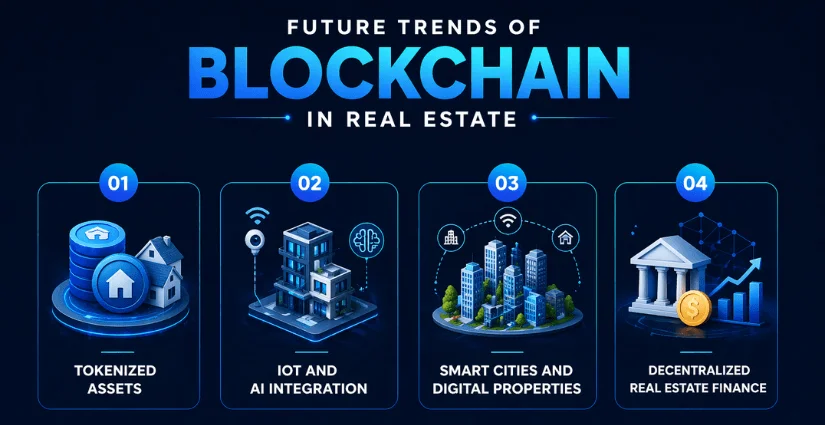
- Integration with AI and smart technologies is expected to further accelerate adoption and improve transaction efficiency
👉 Key Insight:
Blockchain is transitioning from experimental pilots to real-world implementations, with long-term transformative potential.
🎯 Final Insight
The market data clearly shows that blockchain in real estate is moving from early adoption to rapid expansion. With growing investment, increasing use cases, and strong technological advancements, blockchain is set to play a critical role in reshaping global property markets in the coming years.
Core Features
Blockchain technology introduces a set of core features that address long-standing challenges in the real estate industry, such as lack of transparency, inefficient processes, and high transaction costs. These foundational capabilities enable businesses to create secure, efficient, and trust-driven real estate platforms.
🔗 Decentralized Ledger
At the heart of blockchain lies a decentralized ledger that records all transactions across a distributed network of nodes. Unlike traditional centralized databases, this system eliminates the need for a single controlling authority.
Key benefits:
- No single point of failure
- Improved data reliability and consistency
- Enhanced transparency across all stakeholders
👉 This ensures that property records and transactions are accurate, verifiable, and accessible in real time.
📦 Property Tokenization
Tokenization is one of the most transformative features of blockchain in real estate. It involves converting physical property assets into digital tokens that can be traded on blockchain platforms.
Key benefits:
- Enables fractional ownership
- Increases liquidity in real estate markets
- Opens investment opportunities to a global audience
👉 This feature democratizes real estate by allowing smaller investors to participate in high-value assets.
🔐 Data Security & Immutability
Blockchain ensures that once data is recorded, it cannot be altered or deleted without consensus from the network. This immutability significantly reduces the risk of fraud and data manipulation.
Key benefits:
- Tamper-proof property records
- Secure transaction history
- Reduced risk of disputes and fraud
👉 It builds trust and confidence among buyers, sellers, and investors.
📊 Transparency & Auditability
Blockchain provides full visibility into transactions, allowing all participants to access the same data in real time.
Key benefits:
- Clear transaction history
- Improved accountability
- Easy auditing and compliance
👉 This transparency reduces disputes and enhances collaboration between stakeholders.
🤝 Smart Contracts
Smart contracts are self-executing agreements stored on the blockchain that automatically enforce predefined conditions.
Key benefits:
- Automates property transactions
- Eliminates intermediaries
- Speeds up deal execution
👉 For example, ownership transfer can occur automatically once payment conditions are met, reducing delays and manual processes.
📁 Digital Documentation
Blockchain enables secure storage and sharing of digital property documents such as titles, agreements, and certificates.
Key benefits:
- Reduced paperwork
- Easy access to documents
- Improved record management
👉 This streamlines documentation processes and reduces administrative overhead.
🎯 Final Insight
Core features like decentralization, tokenization, security, transparency, and smart contracts form the backbone of blockchain-based real estate systems. By leveraging these capabilities, businesses can build platforms that are more efficient, secure, and accessible, paving the way for a modern and digitally transformed real estate ecosystem.
Advanced Features
To fully unlock the potential of blockchain in real estate, advanced features go beyond basic functionality and introduce intelligence, automation, and enhanced user experiences. These capabilities help businesses create next-generation platforms that are scalable, secure, and highly efficient.
🤖 AI Integration & Predictive Analytics
Combining blockchain with Artificial Intelligence (AI) enables smarter decision-making and data-driven insights.
Key capabilities:
- Predict property prices and market trends
- Analyze investment risks
- Provide personalized property recommendations
👉 This empowers investors and businesses to make informed, strategic decisions.
🌐 IoT Integration for Smart Properties
The integration of Internet of Things (IoT) devices with blockchain allows real-time monitoring and management of properties.
Features include:
- Smart locks and automated access control
- Real-time tracking of utilities and maintenance
- Monitoring environmental conditions (temperature, security, etc.)
👉 Blockchain ensures that IoT data is secure, tamper-proof, and verifiable.
📡 Real-Time Transactions & Payments
Blockchain enables near-instant transactions, eliminating delays typically associated with traditional property deals.
Key benefits:
- Faster property transfers
- Instant payment settlements
- Reduced reliance on intermediaries
👉 This significantly improves transaction speed and efficiency.
🧠 Digital Identity Verification
Advanced identity management systems ensure that all parties involved in transactions are verified and authenticated.
Capabilities:
- Blockchain-based digital IDs
- KYC (Know Your Customer) integration
- Fraud prevention mechanisms
👉 Enhances security and trust across the platform.
🔐 Advanced Security Layers
While blockchain itself is secure, additional layers further strengthen the system.
Features include:
- Multi-signature authentication
- Role-based access control
- End-to-end encryption
👉 These measures protect sensitive data and prevent unauthorized access.
☁️ Cloud & Hybrid Infrastructure Integration
Modern blockchain platforms often integrate with cloud technologies for better scalability and performance.
Benefits:
- Scalable storage and computing power
- Real-time data synchronization
- Improved system performance
👉 Enables platforms to handle large volumes of transactions and users efficiently.
📦 Asset Tokenization & Secondary Markets
Beyond basic tokenization, advanced platforms support trading of tokenized assets in secondary markets.
Features include:
- Peer-to-peer asset trading
- Liquidity pools
- Global investment access
👉 This creates a dynamic and liquid real estate marketplace.
📊 Advanced Analytics & Reporting
Data analytics tools provide deeper insights into transactions, investments, and market trends.
Capabilities:
- Real-time dashboards
- Performance tracking
- Investment analytics
👉 Helps stakeholders make data-driven decisions.
🎯 Final Insight
Advanced features such as AI integration, IoT connectivity, real-time transactions, and enhanced security are transforming blockchain-based real estate platforms into intelligent ecosystems. By adopting these innovations, businesses can deliver high-performance, secure, and future-ready solutions that stand out in a rapidly evolving digital landscape.
Development Process
Developing a blockchain-based real estate solution requires a structured and strategic approach to ensure security, scalability, and seamless user experience. Since blockchain applications involve sensitive financial and property data, each phase must be carefully planned and executed.
🔍 Step 1: Requirement Analysis & Use Case Definition
The process begins with identifying business objectives and defining how blockchain will be used in the real estate ecosystem.
Key activities:
- Analyze market needs and challenges
- Define use cases (property tokenization, digital registry, smart contracts)
- Identify target users and stakeholders
👉 This step ensures clarity and alignment with business goals.
🧩 Step 2: Blockchain Platform Selection
Choosing the right blockchain platform is critical for performance and scalability.
Popular options:
- Ethereum (smart contracts, tokenization)
- Hyperledger (enterprise solutions)
- Corda (financial transactions)
👉 The selection depends on security, cost, and project requirements.
🎨 Step 3: UI/UX Design
A user-friendly interface is essential for adoption, especially for non-technical users.
Key activities:
- Create wireframes and prototypes
- Design dashboards for buyers, sellers, and investors
- Focus on intuitive navigation
👉 Good design improves usability and engagement.
💻 Step 4: Development & Smart Contract Creation
This is the core phase where the platform is built.
Includes:
- Smart contract development for transactions
- Backend development for data management
- Frontend development for user interaction
👉 Ensures the system is functional, secure, and scalable.
🔗Step 5: Integration with External Systems
Blockchain platforms must integrate with other tools and services.
Examples:
- Payment gateways
- KYC/AML verification systems
- Property databases and APIs
👉 Integration enhances functionality and real-world usability.
🧪 Step 6: Testing & Quality Assurance
Thorough testing is essential to ensure reliability and security.
Types of testing:
- Smart contract auditing
- Performance testing
- Security testing
👉 Prevents vulnerabilities and ensures smooth performance.
🚀 Step 7: Deployment & Launch
After testing, the platform is deployed on the blockchain network.
Key tasks:
- Network configuration
- Deployment of smart contracts
- Launch of the platform
👉 Ensures a successful go live.
📈 Step 8: Maintenance & Upgrades
Post-launch, continuous updates are required to keep the platform efficient.
Includes:
- Bug fixes and performance optimization
- Feature upgrades
- Security updates
👉 Supports long-term growth and scalability.
🎯 Final Insight
A well-defined development process ensures that blockchain real estate platforms are secure, efficient, and scalable, enabling businesses to deliver reliable and future-ready solutions.
Required Team Structure
Building a blockchain-based real estate platform requires a multi-disciplinary team with expertise in blockchain technology, real estate processes, and software development. Since these platforms handle sensitive financial transactions and property data, having the right team ensures security, scalability, and successful implementation.
👨💼 Product Manager
The Product Manager defines the overall vision, roadmap, and business goals of the platform.
Responsibilities:
- Define product strategy and features
- Coordinate between teams
- Ensure timely delivery
👉 Acts as the central decision-maker for the project.
📊 Business Analyst
The Business Analyst translates business requirements into technical specifications.
Responsibilities:
- Conduct market research
- Define use cases (tokenization, smart contracts)
- Document requirements
👉 Ensures alignment between business needs and development.
💻 Blockchain Developers
These specialists build the core blockchain infrastructure.
Responsibilities:
- Develop smart contracts
- Design blockchain architecture
- Ensure security and performance
👉 They are critical for implementing decentralized solutions.
⚙️ Frontend & Backend Developers
Developers create the user interface and backend systems.
Responsibilities:
- Build dashboards and user interfaces
- Develop APIs and database systems
- Ensure seamless functionality
👉 They bring the platform to life.
🎨 UI/UX Designer
Designers focus on creating intuitive and user-friendly interfaces.
Responsibilities:
- Design wireframes and prototypes
- Improve user experience
- Ensure easy navigation
👉 Enhances user engagement and adoption.
🔐 Security Expert
Security is essential in blockchain applications.
Responsibilities:
- Implement encryption and authentication
- Conduct security audits
- Prevent fraud and vulnerabilities
👉 Protects sensitive data and transactions.
🧪 QA Engineer
QA engineers ensure the platform is bug-free and reliable.
Responsibilities:
- Perform testing and quality checks
- Identify and fix issues
- Ensure performance across devices
👉 Maintains platform quality.
📣 Marketing & Support Team
This team handles promotion and user engagement.
Responsibilities:
- Marketing campaigns
- Customer support
- User onboarding
👉 Drives growth and ensures customer satisfaction.
🎯 Final Insight
A well-structured team with diverse expertise is essential for building a secure, scalable, and efficient blockchain real estate platform, ensuring long-term success and innovation.
Monetization Methods
Blockchain-based real estate platforms offer diverse monetization opportunities by combining traditional real estate revenue models with modern digital strategies. A well-planned monetization approach ensures sustainable growth, recurring revenue, and long-term profitability.
💰 Subscription Model
Many platforms operate on a SaaS (Software-as-a-Service) model, charging users recurring fees for access to premium features.
Includes:
- Monthly or yearly subscription plans
- Access to dashboards, analytics, and advanced tools
👉 Provides predictable and stable revenue streams.
📦 Transaction Fees
Charging a small fee for each transaction is one of the most common revenue models.
Examples:
- Property buying/selling fees
- Token trading charges
- Smart contract execution fees
👉 Scales revenue with platform usage.
🤝 Enterprise Licensing
Businesses can sell blockchain solutions to real estate companies, developers, and financial institutions.
Includes:
- Custom-built platforms
- White-label solutions
- Enterprise integrations
👉 Generates high-value contracts and long-term partnerships.
📊 Data & Analytics Services
Blockchain platforms can offer advanced analytics and insights based on transaction data.
Includes:
- Market trends and reports
- Investment insights
- Predictive analytics tools
👉 Creates additional value for investors and enterprises.
🌐 API Monetization
Platforms can charge third-party developers for accessing APIs and integrating services.
Examples:
- Property data APIs
- Tokenization services
- Identity verification tools
👉 Encourages ecosystem growth while generating revenue.
🏢 Tokenization Fees
Platforms can charge fees for converting real estate assets into digital tokens.
Includes:
- Asset listing fees
- Token issuance charges
- Marketplace commissions
👉 Supports a scalable digital investment ecosystem.
🎯 Final Insight
A combination of subscription models, transaction fees, tokenization services, and enterprise solutions creates a diversified revenue strategy. By balancing user value with monetization, businesses can build a profitable and scalable blockchain real estate platform in a competitive market.
Additional Section: Estimated Cost
The cost of developing a blockchain-based real estate platform can vary significantly depending on the complexity, features, and scale of the solution. Businesses must carefully plan their budget based on their goals, target audience, and long-term vision.
💸 Cost Breakdown
- MVP (Minimum Viable Product): $30,000 – $80,000
A basic version with essential features such as smart contracts, property listings, and user authentication. Ideal for startups testing the market. - Mid-Level Platform: $80,000 – $150,000
Includes advanced features like tokenization, payment integration, analytics dashboards, and improved UI/UX. - Enterprise-Level Solution: $150,000 – $500,000+
Fully scalable platforms with AI integration, IoT connectivity, high-end security, and large-scale infrastructure.
⏱️ Development Timeline
- MVP: 3–6 months
- Full-Scale Platform: 6–12 months or more
📊 Key Cost Factors
Several factors influence the overall development cost:
- Feature Complexity: Advanced features like tokenization and AI increase cost
- Blockchain Platform: Ethereum, Hyperledger, or private blockchain choices impact pricing
- Team Location: Development costs vary by region
- Security Requirements: Higher security standards require additional investment
- Third-Party Integrations: Payment gateways, KYC systems, and APIs
🎯Final Insight
While the initial investment may seem high, blockchain-based real estate platforms offer long-term cost savings, improved efficiency, and higher ROI, making them a valuable investment for forward-thinking businesses.
Conclusion
Blockchain technology is rapidly transforming the real estate industry by addressing long-standing challenges such as lack of transparency, inefficient processes, and high transaction costs. Through features like decentralized ledgers, smart contracts, and property tokenization, blockchain enables faster, more secure, and highly efficient property transactions.
As the market continues to evolve, businesses are increasingly adopting blockchain to enhance trust, reduce intermediaries, and improve operational efficiency. The integration of advanced technologies such as AI, IoT, and real-time analytics further strengthens the potential of blockchain, creating intelligent and data-driven real estate ecosystems.
While the development cost of blockchain solutions may vary based on complexity and scale, the long-term benefits—such as reduced fraud, increased accessibility, and improved liquidity—make it a strategic investment. Startups and enterprises that embrace blockchain early can gain a significant competitive advantage in a rapidly digitizing market.
In the coming years, blockchain is expected to become a core component of modern real estate infrastructure, reshaping how properties are bought, sold, and managed. Businesses that leverage this technology effectively will be well-positioned to lead in the future of real estate.
FAQs
Blockchain is a decentralized technology used to store property data securely and enable transparent transactions.
It reduces intermediaries, automates processes, and ensures secure, transparent records.
It converts real estate assets into digital tokens, enabling fractional ownership.
It ranges from $30,000 to $500,000+ depending on complexity.
Yes, blockchain provides high security through encryption, decentralization, and immutability.