



Discovery & Requirements
The process begins with the courier model, shipment workflow, customer journey, service types, pickup, tracking, delivery, and exception scenarios.

ShipNexa is a digital courier and shipment management platform designed to connect shipment booking, pickup, tracking, transit, and delivery within one structured workflow. Customers can create shipments and monitor parcel progress. Courier teams can manage records, operational stages, delivery activities, and exceptions.
MyCloudPulse developed ShipNexa as a connected digital ecosystem for managing courier shipments from booking through delivery.
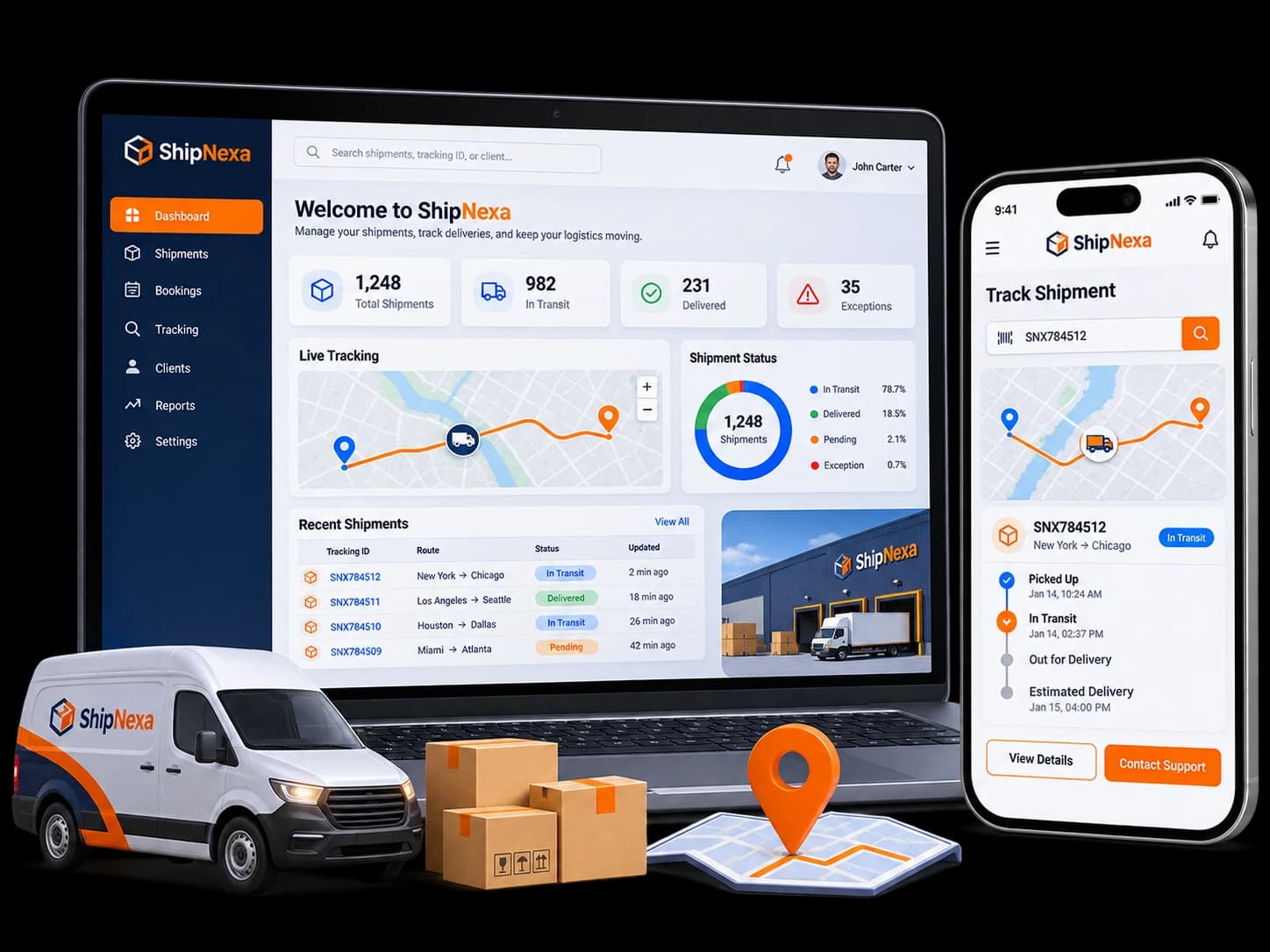
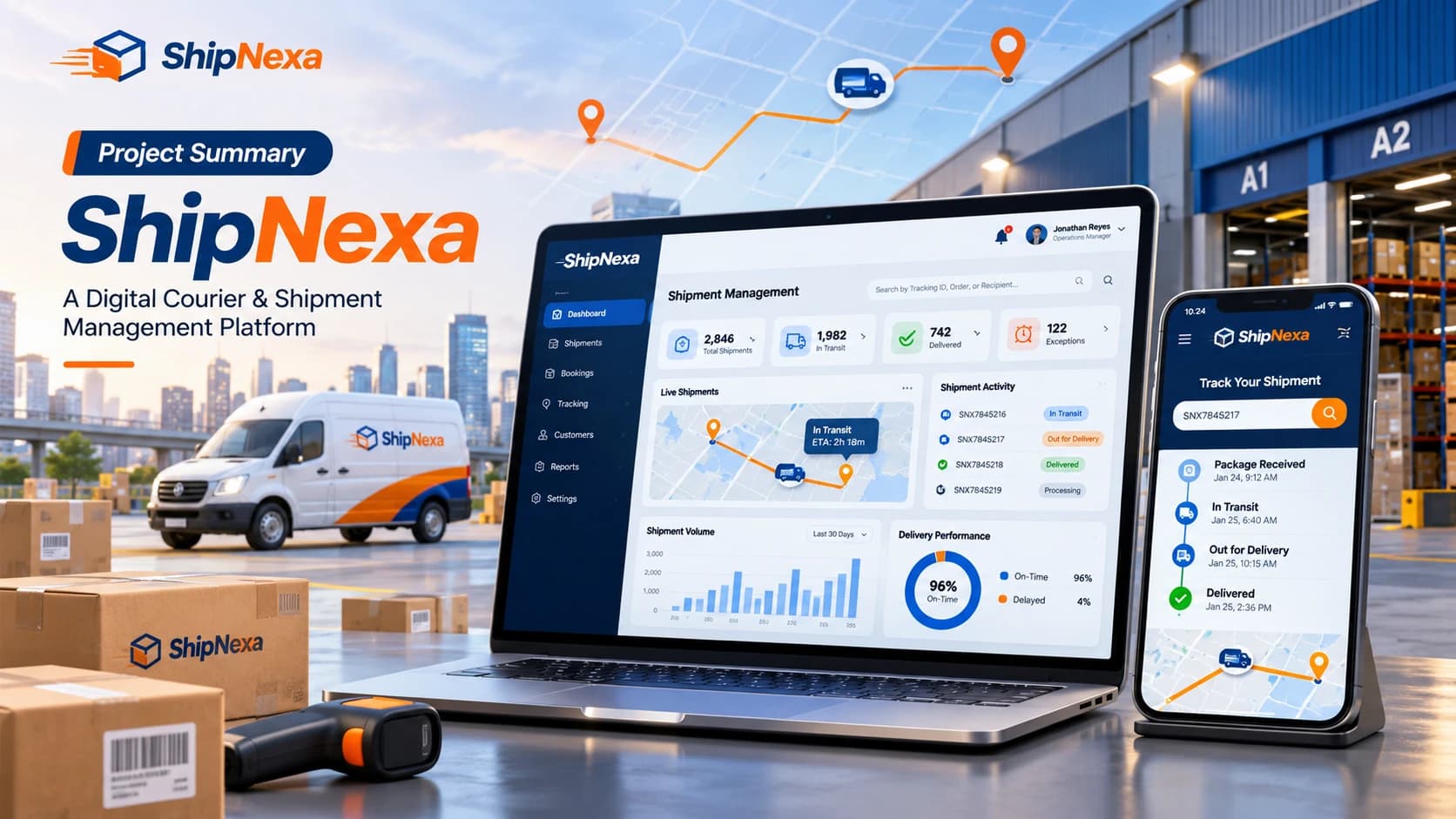
ShipNexa is a digital courier and shipment management solution designed to modernize the process of sending, receiving, tracking, and managing parcels.
Customers can create shipment requests, enter sender and receiver information, provide parcel details, select applicable services, and track their shipments.
Courier teams can manage pickup requests, update shipment statuses, maintain delivery information, and handle exceptions throughout the shipment lifecycle.
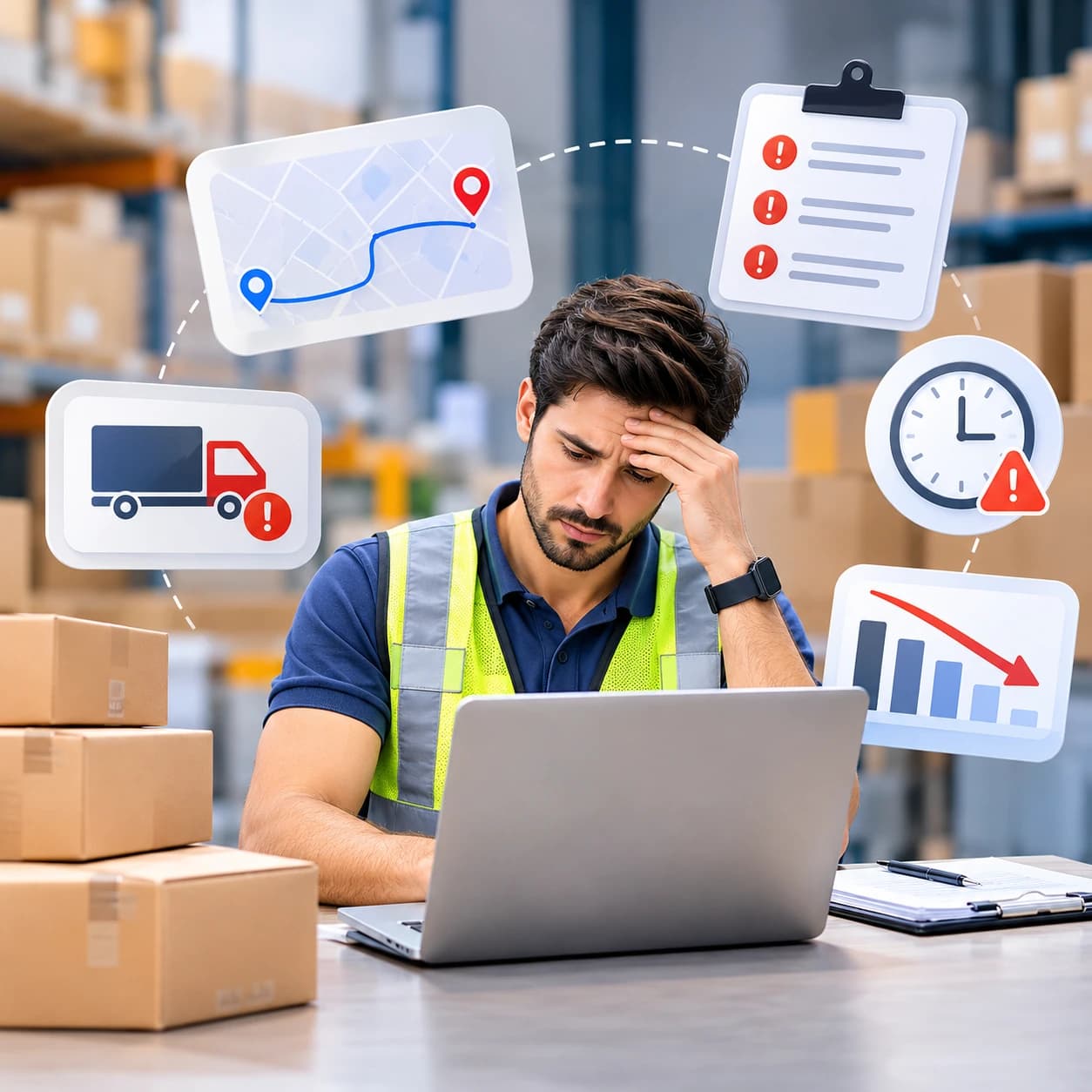
Courier operations involve a large number of shipments moving through multiple stages and operational teams.
Customers need to provide accurate sender and receiver information, describe parcels, select a service, and arrange pickup. Once a shipment enters the network, the business needs to coordinate its movement and keep customers informed.
Courier businesses also need to organize pickups, manage records, and document completed or unsuccessful delivery attempts.
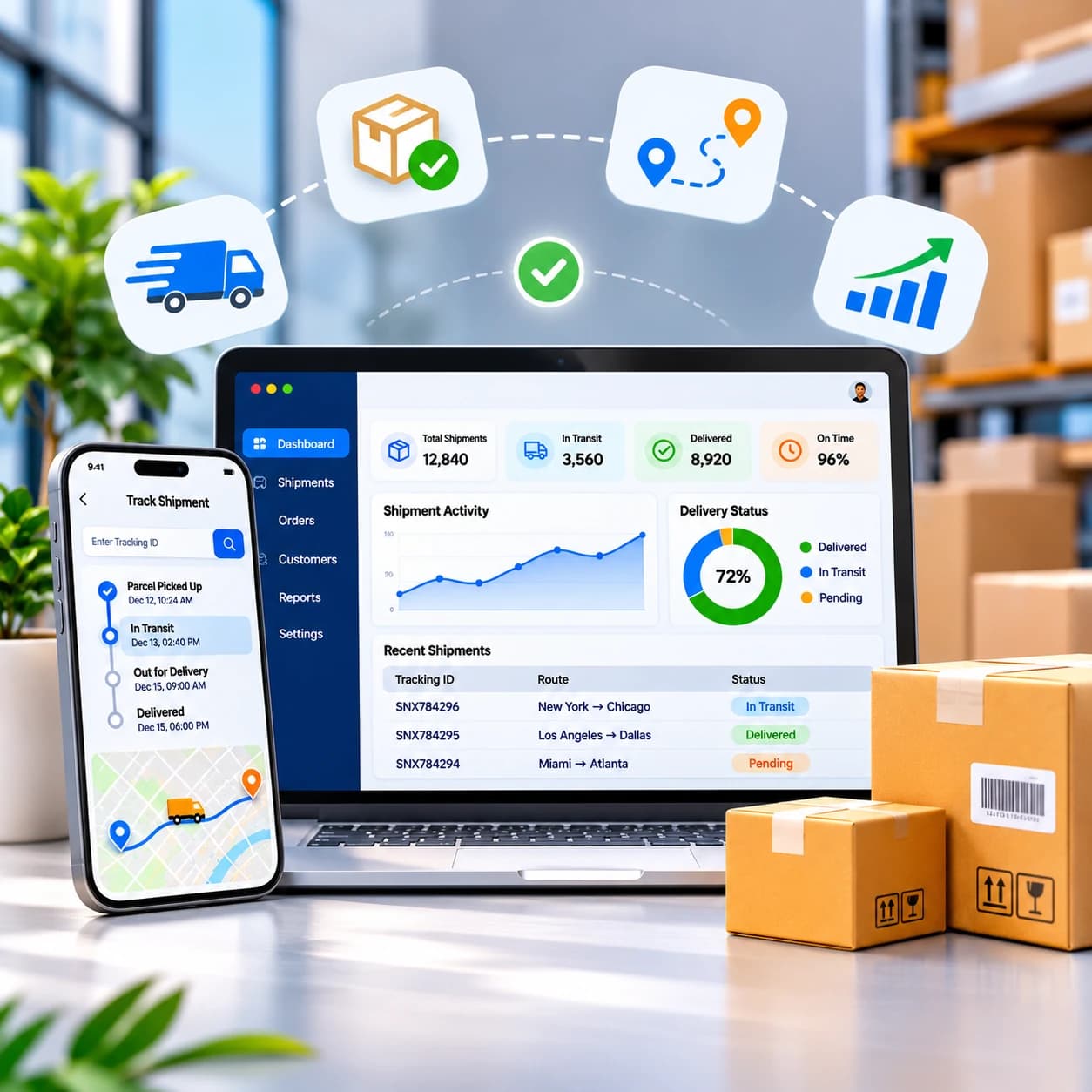
MyCloudPulse developed ShipNexa so customers can enter shipment information and submit a courier request. Once created, the system can generate an identifiable shipment reference for tracking.
Authorized teams can manage the shipment as it progresses through pickup, processing, transit, and delivery.
The overall journey can be represented as Book Shipment → Pickup → Process → Transit → Delivery.
MyCloudPulse developed ShipNexa as a connected digital ecosystem for managing courier shipments from booking through delivery.
The process begins with the courier model, shipment workflow, customer journey, service types, pickup, tracking, delivery, and exception scenarios.

Booking and tracking are mapped with the internal courier workflow, including records, pricing, notifications, and administrative access.

Customer screens focus on shipment creation and tracking. Operational screens focus on pickups, stages, delivery, and exceptions.

Functionality covers booking, parcel management, pickup scheduling, tracking, status updates, accounts, pricing, notifications, and logistics management.

The shipment lifecycle is tested across booking, pickup, processing, transit, delivery, exceptions, tracking, and operational permissions.

The platform can be prepared for deployment according to the courier business’s infrastructure and operational requirements.
The platform can be refined as shipment volumes, delivery regions, service types, and operational users evolve.
Capabilities organized around user and business requirements confirmed in the product interface.
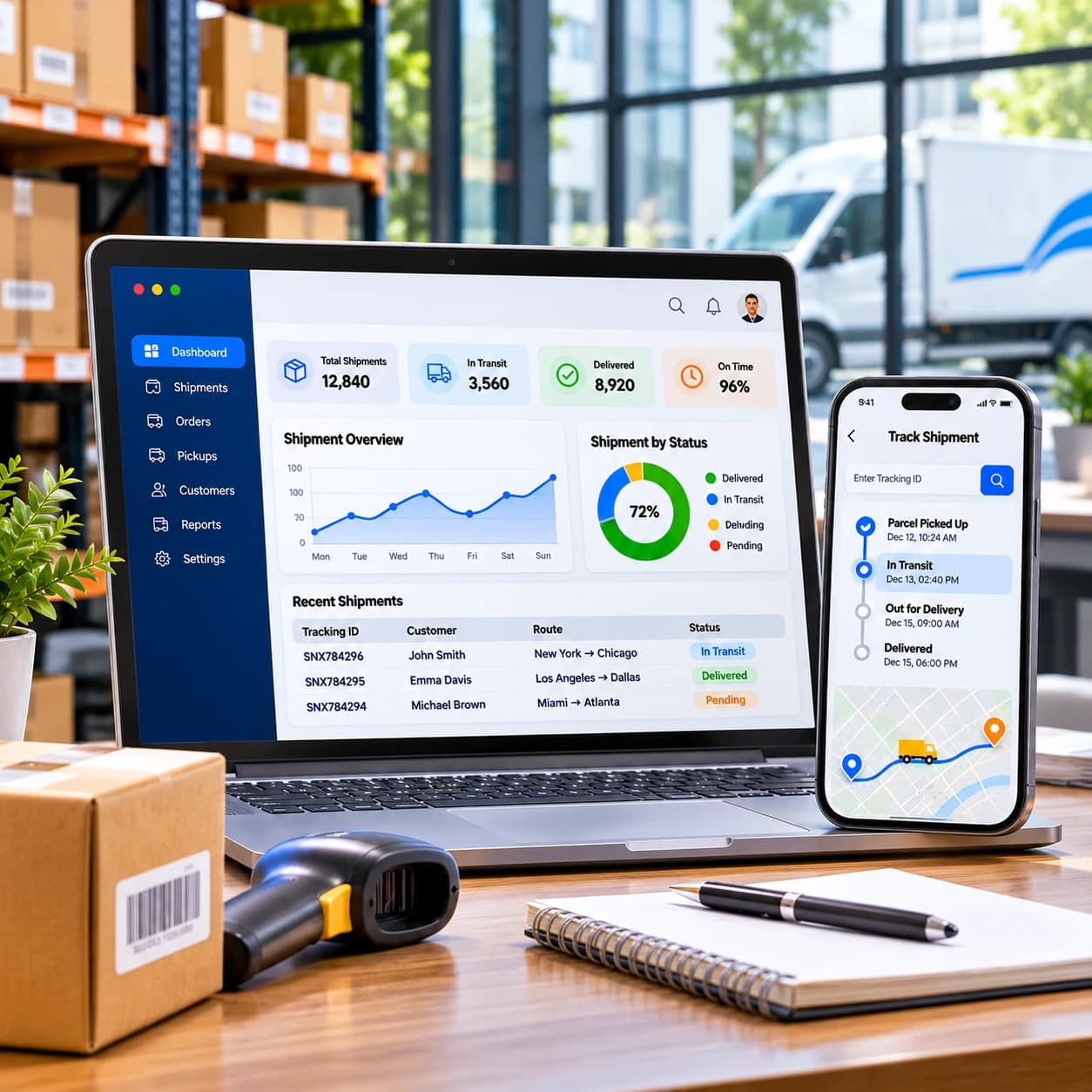
Customers enter sender details, receiver information, parcel information, pickup location, destination, and service preferences. The platform creates a shipment record and reference.
The platform can capture package type, quantity, dimensions, weight, and other details supported by the courier workflow.
Pickup information supports collection, and customers can use the shipment reference to view recorded progress.
A typical workflow is Booked, Pickup Scheduled, Picked Up, In Transit, Out for Delivery, and Delivered. Exception statuses can cover failed attempts, returns, and other situations.
Service selection and pricing can follow the operator’s rules, and sender and receiver addresses are maintained in a structured format, including a foundation for serviceability checks.
Customer accounts and shipment history sit alongside role-based logistics management and administrative controls for services, records, and access.
Create a shipment, provide details, schedule pickup, track, and receive.
The customer journey can be represented as Create Shipment → Provide Details → Schedule Pickup → Track → Receive.
For courier teams, the interface focuses on pickup requests, shipment details, current status, delivery activities, and exceptions while sharing the same shipment record.
Customers submit the information required to create a shipment.
Courier personnel collect the parcel and update the status.
The shipment enters the courier’s operational workflow.
Tracking reflects movement toward the destination.
The parcel is delivered, or an exception status is recorded.
ROBOTO
Regular, Medium, Semibold, Bold
ShipNexa uses a logistics stack for courier booking, dispatch, and shipment tracking.
 React
 Next.js
 TypeScript
 Node.js
 PostgreSQL
 Socket.io
When a customer creates a booking, the backend stores the shipment information and generates the relevant reference. The data model can maintain relationships between customers, shipments, addresses, service options, pickup information, and tracking records.
ShipNexa is a digital courier and shipment management platform designed to connect shipment booking, pickup, tracking, transit, and delivery within one structured workflow. Customers can create shipments and monitor parcel progress. Courier teams can manage records, operational stages, delivery activities, and exceptions.
ShipNexa creates a centralized digital environment for managing courier and shipment activities.
Project: ShipNexa Industry: Logistics / Courier & Delivery Product Type: Courier & Shipment Management Platform Core Focus: Shipment Booking, Tracking & Delivery Users: Customers & Courier Operations Teams Key Capabilities: Booking, Parcel Management, Pickup, Tracking, Delivery, Exceptions & Administration
ShipNexa is a courier and shipment management platform for booking, pickup, tracking, transit, delivery, and exceptions.
ShipNexa is a digital courier and shipment management platform designed to manage the journey from shipment booking and pickup through tracking, transit, and final delivery.