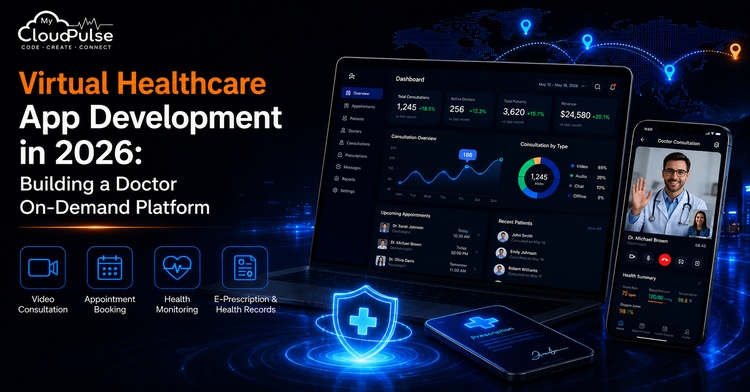
The healthcare business is in the middle of a digital revolution and Doctor On-Demand apps are a key element of modern patient care. Innovations in artificial intelligence (AI), telemedicine, wearable health gadgets, remote patient monitoring and secure cloud technologies are helping to make healthcare more accessible, personalised and easy than ever before.
Patients in 2026 want to be able to reach licensed doctors instantly from their smart phones without having to go to a clinic or hospital. Doctor On-Demand apps are transforming the way medical services are provided, from virtual consultations and AI-powered symptom checkers to e-prescriptions, digital health records and chronic illness management. At the same time, healthcare providers are utilising these platforms to engage patients, cut operating costs, increase their reach, and deliver high-quality treatment outside the limitations of geographical location.
The growing adoption of digital healthcare, supportive government regulations and increasing consumer demand for hassle-free medical services have created a strategic opportunity for healthcare startups, hospitals, clinics, insurance companies and telehealth providers to invest in a Doctor On-Demand app.
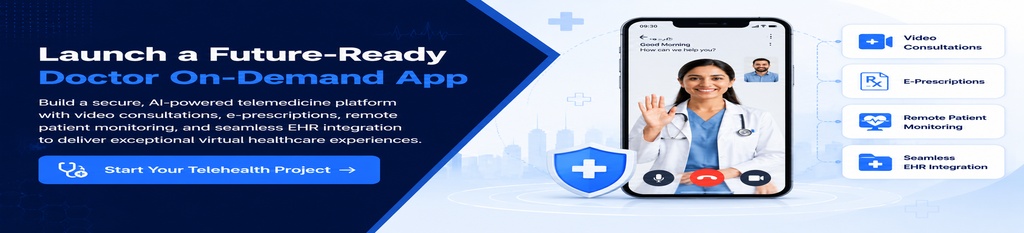
In this detailed guide, we will discuss everything you need to know about Doctor On-Demand app development including its key features, technology stack, development process, costs, compliance requirements, emerging trends, and best practices to build a secure, scalable, and future-ready telemedicine platform in 2026.
What Is a Doctor On Demand App & How Does It Function?
A Doctor On-Demand app is a digital healthcare platform that allows patients to communicate with licensed doctors, specialists and other healthcare professionals anytime and from anywhere through a smartphone, tablet or computer. These apps allow for safe virtual visits by video, voice, or instant messaging, reducing the need for physical visits for many non-emergency medical needs.
Apps like Doctor On-Demand are changing healthcare by making it more accessible, inexpensive and convenient. From a single platform, patients may schedule appointments, consult a doctor in real-time, receive e-prescriptions, access their digital medical data, order lab tests and even monitor chronic health conditions.
These apps make appointment administration easier for healthcare providers, increase patient involvement, decrease administrative burden and extend their reach outside of typical clinic sites. Many current platforms also include AI-powered symptom checkers, wearable health devices, electronic health records (EHR/EMR), online payment gateways, and remote patient monitoring systems to offer a more connected and personalised healthcare experience.
Why Investing in Doctor On-Demand App Development Is a Smart Business Decision in 2026
The rapid expansion of digital healthcare and telemedicine has offered huge potential for healthcare organisations to modernise patient care and grow their offerings. Doctor On-Demand app creation is the best way to provide easy, reliable and affordable healthcare, increase operational efficiency and open new sources of revenue. Whether you are a hospital, clinic, healthcare startup, insurance provider or enterprise healthcare organisation, a Doctor On-Demand app can give you a significant competitive advantage.
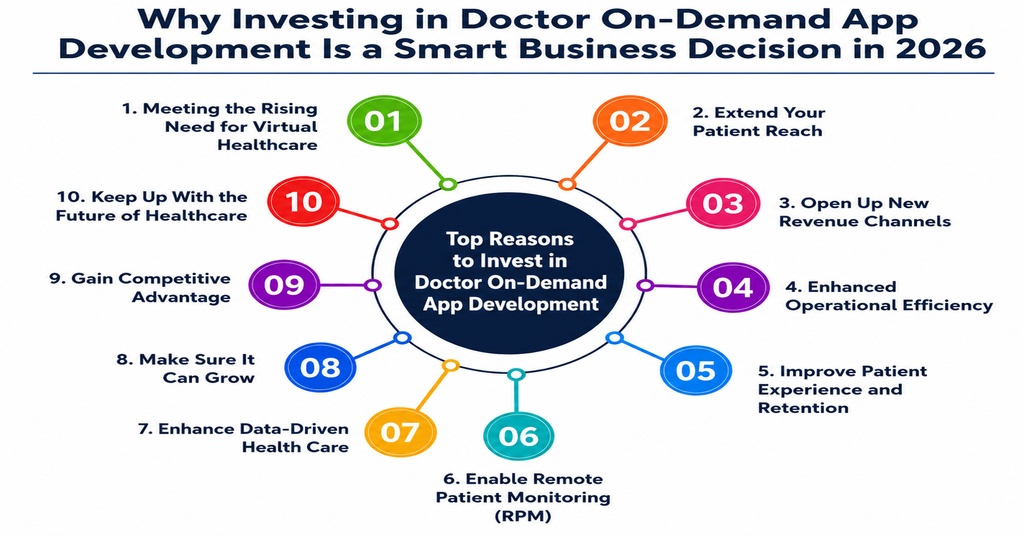
Here are the top reasons why organisations ought to engage in Doctor On-Demand App development:
1. Meeting the rising need for virtual healthcare.
Patients are increasingly opting for online consultations for non-urgent health concerns. The Doctor On-Demand app makes it possible for healthcare providers to give patients constant access to medical professionals, shortening travel time, lowering wait times, and increasing patient convenience.
2. Extend Your Patient Reach
Unlike typical healthcare facilities that serve patients within a specific geographic area, Doctor On-Demand apps allow clinicians to access patients across cities, states, or even nations (as long as they comply with regulations). The wider reach can help firms recruit more patients and grow their consumer base.
3. Open Up New Revenue Channels
Healthcare organisations have revenue streams such as virtual consultation fees, subscription plans, follow-up appointments, premium healthcare services, digital prescriptions, wellness programmes, and collaborations with pharmacies, diagnostic labs, and insurance companies.
4. Enhanced Operational Efficiency
Automating appointment scheduling, patient registration, billing, medical record management and alerts decreases the administrative burden. Healthcare personnel can spend more time caring for patients while reducing manual processes and operational costs.
5. Improve Patient Experience and Retention
Features such as fast appointment scheduling, secure video consultations, online medications, digital health records, reminders and personalised healthcare recommendations offer a seamless patient experience encouraging increased satisfaction and long-term commitment.
6. Enable Remote Patient Monitoring (RPM)
Today’s Doctor On-Demand apps connect with wearables and remote monitoring devices to monitor vital signs, chronic diseases, medication compliance and recovery process. “This enables more proactive care and better health outcomes.
7. Enhance Data-Driven Health Care
This data is collected and analysed to offer healthcare providers with vital insight into the effectiveness of therapy, patient behaviour, and operational performance. AI-enabled analytics can complement personalised care and clinical decision-making.
8. Make Sure It Can Grow
A robust Doctor On-Demand platform may scale effortlessly with your business by including more doctors, specialities, healthcare facilities, languages, payment options, and cutting-edge technologies like AI assistants and remote diagnostics.
9. Gain Competitive Advantage
The rise of digital healthcare will allow companies investing in telemedicine solutions to differentiate themselves by providing faster, more convenient, technology-driven healthcare that meets the demands of evolving patients.
10. Keep Up With the Future of Healthcare
The healthcare of the future will be digital, connected and patient-centric. Furthermore, investing in the creation of Doctor On-Demand app helps companies to use future technologies like AI, IoT, wearable devices, electronic health records (EHR), and predictive healthcare analytics to ensure long-term sustainability and innovation.
Different Types of Doctor On-Demand Apps You Can Build
Apps like Doctor On-Demand cater to different kinds of healthcare demands and commercial strategies. Various telemedicine applications can be developed by enterprises, each catering to a specific audience, medical speciality, and set of services. All of them help patients get the treatment they need, but they do it in different ways.
1. Apps for Telemedicine in General
For regular medical treatment like colds, flu, minor injuries, allergies, infections, and preventative care, these applications link patients with family doctors. Common examples include electronic health records, online appointment scheduling, electronic prescriptions, and video consultations.
2. Apps for Expert Consultation
Without ever setting foot in a hospital, patients may now reach out to experts like dermatologists, cardiologists, gynaecologists, psychiatrists, neurologists, and orthopaedic doctors through these platforms.
Ideal for: Healthcare networks that include multiple specialities and hospitals with multiple departments serving different medical needs.
3. Apps for Mental Health and Therapy
With the use of mental health apps, people can have private consultations via video, audio, or chat with certified mental health professionals. Wellness programmes, meditation, and mood tracking are also available on many platforms. Counselling centres, wellness startups, and mental health organisations are the best candidates.
4. Software for Paediatric Telemedicine
Quick access to paediatricians for consultations, vaccine advice, developmental evaluations, and follow-up care is the primary emphasis of these apps, which are designed to improve children’s healthcare.
5. Monitoring Apps for Chronic Diseases
With the use of virtual consultations, prescription reminders, remote monitoring, and health tracking, these apps assist patients in managing long-term health disorders like diabetes, hypertension, asthma, heart disease, and arthritis. Healthcare facilities, hospitals, and chronic care management organisations will benefit the most from this.
6. Health Apps for Women
Gynaecology consultations, prenatal care, fertility support, period monitoring, postpartum care, and menopause management are just a few of the specialised services offered by women’s health apps. Ideal for fertility clinics, maternity hospitals, and women’s health centres.
7. Software for Remote Patient Monitoring
Patients’ vital signs, including heart rate, blood pressure, glucose levels, oxygen saturation, and electrocardiogram data, can be tracked with the use of RPM apps that connect with wearable devices and medical sensors. Remote patient monitoring allows doctors to intervene as needed. This is ideal for healthcare facilities, home health aides, and programmes that help people manage chronic diseases.
8. Telemedicine Apps for Emergencies
In the event of a medical emergency, these platforms allow users to connect with healthcare providers instantly through features such as location sharing, instant video calls, emergency triage, and ambulance integration. Hospitals, emergency healthcare providers, and ambulance services will benefit the most from this.
9. Business Health Apps
As an element of their wellness programmes, companies can now offer virtual healthcare services to their employees using corporate telemedicine apps. Health screenings, mental health support, doctor consultations, and insurance benefit management are all available to employees.
10. Platforms for Integrated Telemedicine in Hospitals
Incorporating telemedicine with EHR, lab, pharmacy, billing, appointment scheduling, and patient administration, these all-inclusive solutions are built for healthcare networks and hospitals.
Top Benefits of Developing a Doctor On-Demand App in 2026
In the ever-changing landscape of healthcare, applications like Doctor On-Demand have emerged as a game-changer for companies and providers aiming to provide patients with easy, efficient, and person-centered treatment. These platforms enable organisations to streamline operations, raise income, and stay competitive in an increasingly digital market, all while improving access to healthcare services.
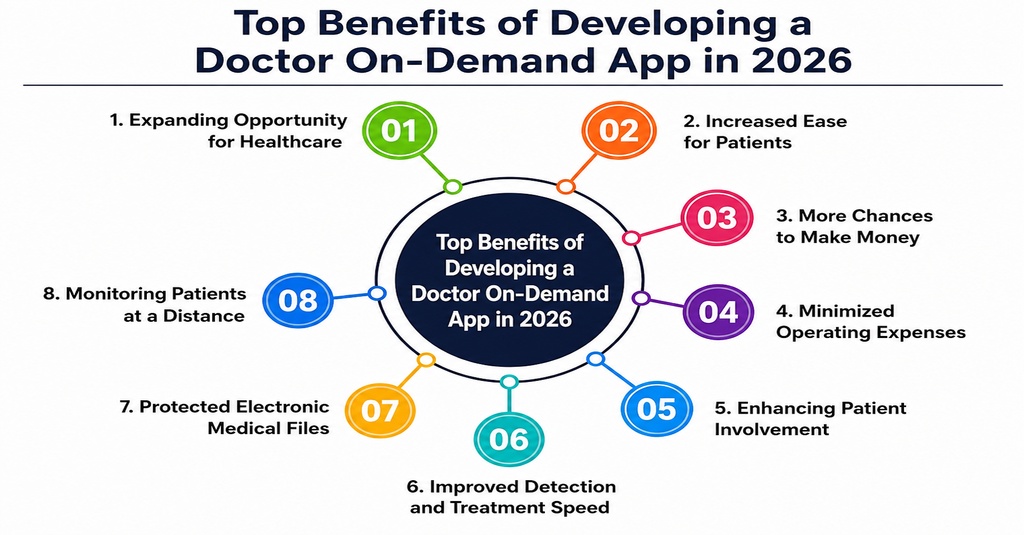
1. Expanding Opportunity for Healthcare
Through the use of Doctor On-Demand apps, users are able to access medical experts around the clock through their computers or cellphones. People in neglected or far-flung locations may benefit greatly from this because of the lack of convenient access to healthcare.
2. Increased Ease for Patients
Appointments, consultations, digital prescriptions, and patient data can all be accessed digitally, eliminating the need for patients to physically visit a clinic. Time is saved, money is saved on transportation, and waiting times are minimised.
3. More Chances to Make Money
Online consultations, premium medical services, subscription-based healthcare plans, follow-up appointments, online pharmacies, online labs, and insurance firms are all ways that healthcare providers might diversify their income streams.
4. Minimised Operating Expenses
Doctor On-Demand apps streamline administrative tasks and operational costs by automating patient registration, invoicing, appointment scheduling, and medical record management.
5. Enhancing Patient Involvement
Improved treatment adherence and patient satisfaction can be achieved through features such as appointment reminders, medication alarms, health tracking, personalised suggestions, and secure messaging. These tools allow healthcare providers to stay in constant communication with patients.
6. Improved Detection and Treatment Speed
By facilitating rapid access to medical advice and treatment for non-emergency disorders, virtual consultations assist healthcare providers better manage patient flow and minimise care delays.
7. Protected Electronic Medical Files
Integrating Electronic Health Records (EHR/EMR) into Doctor On-Demand apps is a great way for patients and doctors to have secure access to their medical records, medications, lab results, and treatment plans all in one place.
8. Monitoring Patients at a Distance
Healthcare providers may now track their patients’ vital signs in real time thanks to integration with wearable gadgets and medical equipment that is enabled by the Internet of Things. When it comes to controlling long-term health issues like diabetes, high blood pressure, and cardiovascular disease, this is invaluable.
Must-Have Features for a Modern Doctor On-Demand App in 2026
Video consultations are just one part of what it takes to build a successful Doctor On-Demand service. While guaranteeing scalability, security, and compliance, modern healthcare apps must provide a frictionless experience for healthcare organisations, administrators, patients, and clinicians. Listed below are the most important characteristics of a Doctor On-Demand app that can compete in the modern digital healthcare market.
1. Safe Registration and Authentication of Users
Make it possible for doctors and patients to sign up using their phone numbers, email addresses, or social media accounts. Improve safety by allowing one-time password (OTP) verification, biometric authentication, MFA, and password recovery.
2. Advanced Filters and Doctor Search
Help people locate the best doctors by letting them narrow their search by gender, geography, experience, consultation fees, ratings, language, and speciality.
3. Scheduling Appointments and Managing Calendar Events
Make it easy for patients to make, change, or cancel appointments using your user-friendly scheduling system. In this way, doctors may control their schedules, availability, and appointment times in real time.
4 High-Definition Video, Voice, and Chat Consultations
To accommodate a variety of consultation preferences, provide secure options such as video calls, audio conversations, and instant messaging. Protect the privacy of patients by utilising end-to-end encryption.
6. A Symptom Checker Driven by AI
Incorporate AI to assist people in evaluating their symptoms prior to seeking medical advice. AI can help doctors by suggesting the right specialist and providing them with basic patient data.
6. Integration of Error-Checking and Medical Record Systems
Keep all of your patients’ records in one safe place: prescriptions, lab results, allergies, treatment plans, consultation notes, and medical history.
7. Internet-Based Prescriptions
Enable doctors to easily create and submit electronic prescriptions that comply with all regulations. Patients can then order their drugs from pharmacies that are connected into the app.
8. Integrating Reliable Online Payment Systems with Insurance
Provide easy-to-understand billing with downloaded invoices and accept a variety of payment options like UPI, digital wallets, net banking, and insurance claims.
9. HCM Through Remote Access
You may track your vitals—heart rate, blood pressure, glucose levels, oxygen saturation, and sleep patterns—in real time by connecting with wearable gadgets and medical equipment that is Internet of Things (IoT) capable.
Choosing the Right Technology Stack for Doctor On-Demand App Development in 2026
One of the most important choices to make when developing a Doctor On-Demand service is choosing the correct technological stack. To keep up with rising user demands and government mandates, telemedicine platforms in 2026 will need enterprise-grade security, scalability in the cloud, real-time communication, artificial intelligence capabilities, and high performance. You can rest assured that your application will be secure, scalable, and able to support cutting-edge healthcare features like electronic health records, remote patient monitoring, video consultations, and artificial intelligence-assisted diagnostics if you choose a current technology stack.
| Technology Layer | Recommended Technologies |
| Mobile App Development | Flutter, React Native, Swift (iOS), Kotlin (Android) |
| Frontend (Web Panel) | React.js, Angular, Vue.js |
| Backend Development | Node.js, NestJS, Python (FastAPI/Django), Java Spring Boot, .NET Core |
| Database | PostgreSQL, MongoDB, MySQL, Firebase Firestore |
| Cloud Infrastructure | AWS, Microsoft Azure, Google Cloud Platform (GCP) |
| Video Consultation | WebRTC, Agora, Twilio Video, Vonage Video API |
| Real-Time Communication | Socket.IO, Firebase Cloud Messaging (FCM), WebSockets |
Doctor On-Demand App Development Cost in 2026: Complete Pricing Breakdown
The complexity of the features, the platforms that are supported, the level of healthcare compliance (HIPAA, GDPR, HL7/FHIR), the capabilities of artificial intelligence, the integrations with third parties, and the location of the development team are all factors that determine the cost of establishing a Doctor On-Demand app in 2026. Enterprise healthcare solutions demand substantially more funding than startups can muster owing to the complex security, interoperability, and scalability needs. Experts predict that a minimum viable product (MVP) for telemedicine will cost between $20,000 and $50,000, with enterprise-grade solutions including artificial intelligence (AI), electronic health record (EHR) integration, and remote patient monitoring costing more than $200,000.
| App Type | Estimated Development Cost (USD) | Estimated Timeline |
| MVP (Basic Telemedicine App) | $20,000 – $50,000 | 2–4 Months |
| Standard Healthcare App | $50,000 – $100,000 | 4–6 Months |
| Advanced Doctor On-Demand Platform | $100,000 – $200,000 | 6–9 Months |
| Enterprise Telehealth Ecosystem | $200,000 – $500,000+ | 9–15 Months |
Key Cost Components
| Development Component | Estimated Cost |
| UI/UX Design | $5,000 – $20,000 |
| Patient, Doctor & Admin Panels | $15,000 – $60,000 |
| Video Consultation Integration | $8,000 – $30,000 |
| Backend Development & APIs | $15,000 – $50,000 |
| EHR/EMR Integration | $10,000 – $40,000 |
| AI Features (Symptom Checker, Medical Assistant, Voice Notes) | $15,000 – $60,000+ |
| Payment Gateway Integration | $3,000 – $10,000 |
| Security & Healthcare Compliance | $10,000 – $40,000 |
| QA & Testing | $8,000 – $25,000 |
| Deployment & Maintenance (Annual) | 15–25% of Total Development Cost |
Common Challenges in Doctor On-Demand App Development and How to Overcome Them
Making a platform for video consultations is just one part of developing a Doctor On-Demand app. Delivering a safe, dependable, and user-friendly telemedicine service requires developers to tackle technical, regulatory, and operational hurdles. Some of the most typical problems and their workable solutions are detailed here.
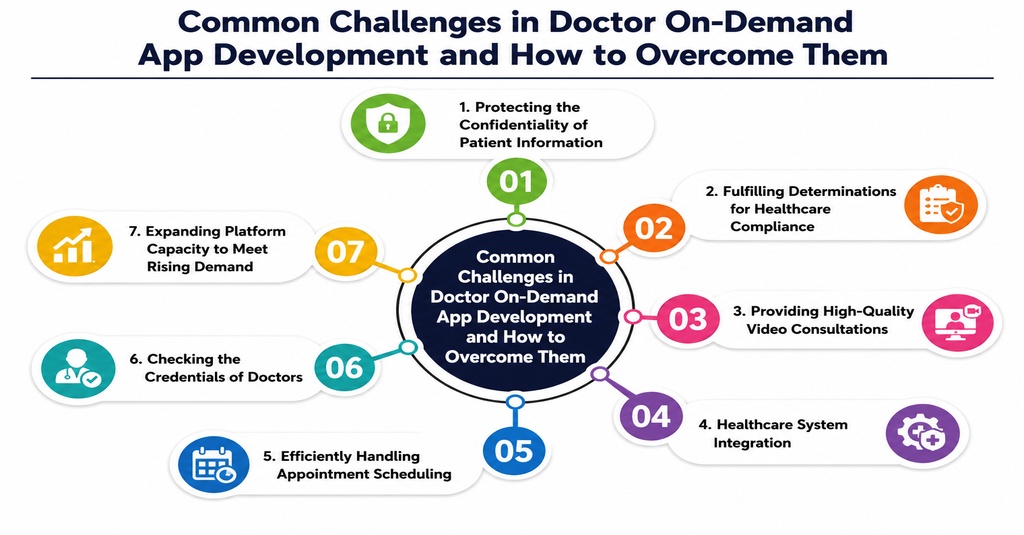
1. Protecting the Confidentiality of Patient Information
Applications in the healthcare industry are easy prey for hackers because of the sensitive patient data they hold.
Solution:
Secure your data by encrypting it from beginning to end, using a multi-factor authentication (MFA) system, controlling access based on roles (RBAC), and conducting regular security audits. Make sure that all healthcare practices adhere to data protection rules and regulations, including HIPAA, GDPR, and any local ones.
2. Fulfilling Determinations for Healthcare Compliance
Strict adherence to legal and industry standards is required by healthcare legislation, which differ among countries.
Solution:
Make sure to consider compliance when designing the application. Ensure compliance with regulations such as HIPAA, GDPR, HL7, and FHIR; keep audit records; digitally acquire patient permission; and collaborate with compliance and legal professionals during development.
3. Thirdly, providing first-rate video consultations
Patients may have a bad experience and lose faith in the platform if the audio and video are of low quality.
Solution:
Take advantage of low-latency communication, scalable cloud infrastructure, adaptive bitrate streaming, and dependable WebRTC-based video technologies. For consultations to go off without a hitch, the app needs to be optimised for different network circumstances.
4. Healthcare System Integration
It could be technically difficult to connect with insurance companies, pharmacies, laboratories, and electronic health records (EHRs and EMRs).
Solution:
Make use of healthcare-related open standards for APIs and interoperability, like HL7 and FHIR. Construct an adaptable architecture for integration that enables safe data transfer with other healthcare systems.
5. Efficiently Handling Appointment Scheduling
Healthcare providers and patients alike may feel the effects of scheduling difficulties, double reservations, and missed appointments.
Solution:
To enhance operational efficiency, install a real-time appointment management system that includes sophisticated scheduling algorithms, automated reminders, calendar synchronisation, and waitlists.
6. Checking the Credentials of Doctors
People seeking medical advice must have faith that the people they are speaking with are competent and licensed.
Solution:
Before enabling providers to become part of the platform, implement a thorough doctor verification procedure that validates licenses, verifies identities, authenticates documents, and conducts periodic assessments of credentials.
7. Expanding Platform Capacity to Meet Rising Demand
The application’s reliability and lack of downtime must be maintained even as the number of users grows.
Solution:
Construct the platform with auto-scaling infrastructure, cloud-native design, microservices, containerisation, load balancing, and the ability to handle escalating traffic.
Conclusion
With the rise of digital technologies, Doctor On-Demand apps are changing the way medical services are provided in the future of healthcare. These platforms allow healthcare professionals to provide faster, more accessible, and patient-centric treatment by integrating telemedicine, AI, secure cloud infrastructure, wearable device integration, and remote patient monitoring.
Purchasing a Doctor On-Demand app in 2026 is not just an improvement in technology; it’s a strategic move for healthcare startups, hospitals, clinics, insurance companies, and enterprise healthcare providers. With careful planning, a telemedicine platform may increase participation from patients, decrease administrative burdens, open up new avenues for financial gain, and break down geographical barriers to healthcare.
However, picking the correct technological stack, putting in place strong security measures, making sure it complies with healthcare legislation, and creating a scalable architecture that can adapt to new technologies are all crucial to success. A future-proof, secure Doctor On-Demand platform may be built by companies by concentrating on user experience, interoperability, and new technologies like AI and the Internet of Things. This platform can fulfil the increasing demand for virtual healthcare and give long-term benefits to patients and providers alike.
FAQs
Que 1: What is the approximate price tag for developing a Doctor On-Demand app?
Answer 1: The features, platform, compliance needs, and degree of customisation of the app determine the typical development cost, which can range from $20,000 to $500,000+.
Que 2: What is the typical timeframe for developing a Doctor On-Demand app?
Answer 2: It might take anywhere from nine to fifteen months to build a fully functional enterprise telemedicine platform, with an MVP typically taking two to four months.
Que 3: What are the most important aspects of an On-Demand Doctor app?
Answer 3: Patients’ health records, electronic health records (EHRs), electronic prescriptions, appointment scheduling, secure payments, artificial intelligence (AI) symptom checker, and electronic health records (EHRs) are essential elements.
Que 4: When building the Doctor On-Demand app, which technologies are recommended?
Answer 4: Building scalable and secure telemedicine solutions is a popular use case for popular technologies such as Flutter, React Native, Node.js, Python, PostgreSQL, AWS, WebRTC, Twilio, Agora, Firebase, and AI frameworks.
Que 5: In 2026, what are the benefits for healthcare organisations of investing in Doctor On-Demand apps?
Answer 5: Providers are able to offer digital healthcare services that are secure, convenient, and scalable with the help of these apps, which also enhance income prospects, decrease operational expenses, and improve patient accessibility.