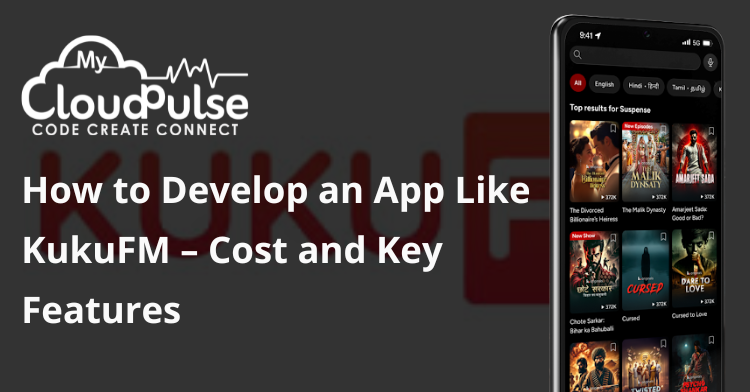
The way people consume content is changing, and not just visually. In recent years, audio has quietly emerged as one of the fastest-growing content formats worldwide. From audiobooks and podcasts to exclusive audio series, users increasingly prefer content they can enjoy while commuting, exercising, working, or simply relaxing. This growing shift in listening habits is motivating startups and media companies to develop an app like KukuFM, delivering personalized, mobile-first audio experiences tailored for on-the-go audiences.
In emerging markets, apps like KukuFM have successfully built mobile-first audio streaming platforms centered on regional languages, original storytelling, and affordable subscriptions. Unlike global podcast platforms that focus heavily on English-speaking audiences, KukuFM carved out a strong niche by serving India’s multilingual and mobile-centric user base.
In contrast growing demand has encouraged entrepreneurs, publishers, and media companies to explore how to develop an app like KukuFM, one that seamlessly combines content discovery, personalization, offline listening, and scalable monetization.
Building such a platform, however, goes far beyond uploading MP3 files and adding a play button. Successful audio streaming apps rely on thoughtful product design, scalable backend systems, reliable audio delivery infrastructure, creator workflows, and sustainable revenue models.
Throughout this blog, we’ll explore:
- Market opportunity and growth statistics
- Core and advanced features of a KukuFM-like app
- Step-by-step development process
- Required team structure
- Cost considerations and monetization models
- Key challenges and FAQs
Whether you’re a startup founder or a media business planning to enter the audio streaming space, this guide offers a practical and realistic roadmap.
Market Stats: Audio Streaming & Audiobook Industry
As a global shift toward on-demand audio consumption has unlocked massive opportunities for platforms like KukuFM. What was once considered a niche format has now become a mainstream digital consumption channel, driven by mobile-first behavior and multitasking lifestyles.
For Across world, audio streaming, audiobooks, and podcasts are seeing consistent growth as users seek flexible, screen-free content experiences. This momentum is supported by rapid smartphone adoption, affordable mobile data, and the increasing demand for personalized, on-demand content.
Global Market Overview
· At scale, the global audiobook market was valued at approximately USD 6.8 billion in 2023 and is projected to reach USD 35–40 billion by 2030, growing at a CAGR of 25–27%.
· Meanwhile, the global podcast industry crossed USD 25 billion in 2024 and is expected to exceed USD 100 billion by 2030, driven by advertising, subscriptions, and branded content.
· Overall, digital audio consumption worldwide is increasing at a year-over-year rate of 18–22%, outperforming video growth across several emerging markets.
Key drivers include:
· Increased smartphone penetration
· Affordable mobile data
· Rise of multitasking consumption (audio during travel, work, fitness)
· Demand for personalized and on-demand content
India & Emerging Markets Opportunity
India represents one of the largest untapped audio OTT markets in the world.
· Over 750 million smartphone users
· More than 65% of internet users prefer content in regional languages
· India’s audio streaming market is growing at a CAGR of 30%+
· Tier-2 and Tier-3 cities contribute over 55% of new audio app users
Unlike video streaming, audio apps:
· Consume 80–90% less data
· Perform better on low-end devices
· Have lower infrastructure and content production costs
As a result of this trend, platforms like KukuFM highly scalable and profitable in price-sensitive markets.
Growth Potential & YoY Projections
· Audio OTT user base in India is expected to grow 2.5x by 2028
· Paid audio subscriptions are growing at 20–25% YoY
· Regional-language audio content consumption is increasing at 35% YoY
In emerging markets clearly indicate why startups and media companies are racing to develop an app like KukuFM and capture this fast-expanding segment.
Core Features Develop of an App Like KukuFM
Core features form the foundation of a KukuFM-style audio streaming platform.
1. User Registration & Authentication
- Sign up via phone number, email, or social login
- OTP-based authentication (popular in mobile-first markets)
- Secure session management
2. User Profiles
- Personalized listening history
- Saved playlists and favorites
- Language preferences
3. Audio Content Library
- Audiobooks
- Podcasts
- Audio series (fiction, romance, thrillers, mythology, self-help)
- Categorized by:
- Genre
- Language
- Popularity
- New releases
4. Search & Discovery
- Search by title, author, narrator, genre
- Trending and recommended sections
- Language-based discovery
5. Audio Player
- Play, pause, skip
- Seek bar
- Background playback
- Lock-screen controls
6. Continue Listening
- Resume playback from last position
- Sync across devices
7. Offline Downloads
- Download audio for offline listening
- Storage management
8. Multi-Device Support
- Android & iOS apps
- Web app (optional, but useful for discovery)
Advanced Features Develop an App Like KukuFM
Advanced features improve retention, engagement, and monetization.
1. Personalized Recommendations
- AI/ML models analyze:
- Listening history
- Completion rate
- Genre and language preferences
This reduces content discovery friction.
2. Multi-Language & Localization Support
- Deep regional language support
- Language-first onboarding
- Localized UI and content discovery
This is a major differentiator for KukuFM.
3. Creator & Publisher Dashboard
- Upload audio content
- Manage metadata
- Track listens, revenue, and engagement
This supports content scalability.
4. Playlist & Queue Management
- Create custom playlists
- Smart queues (next episode auto-play)
5. Smart Downloads
- Automatically download next episode
- Delete completed audio
6. Playback Speed Control
- Speed up or slow down narration
7. Content Access Control
- Free vs premium content gating
- Time-limited access
Development Process: Step by Step
Developing an app like Kuku FM involves multiple phases.
Step 1: Market Research & Niche Definition
- Identify your target audience (language, age, interests)
- Decide content focus:
- Entertainment
- Education
- Self-help
- Fiction
A focused niche reduces early competition.
Step 2: Feature Planning & MVP Scope
Define:
- Must-have features for launch
- Phase-2 enhancements
- Long-term roadmap
This prevents cost overruns.
Step 3: UI/UX Design
Key design principles:
- One-hand mobile usage
- Minimal friction onboarding
- Audio-first navigation
- Clear typography for regional languages
Prototypes and usability testing are critical.
Step 4: Backend Development
Backend responsibilities include:
- User management
- Audio content management
- Recommendation logic
- Subscription & payment handling
Microservices architecture helps with scalability.
Step 5: Audio Streaming Infrastructure
Unlike video, audio streaming focuses on:
- Cloud audio storage
- CDN for fast delivery
- Multiple bitrate encoding
- DRM or access protection
Audio infrastructure is simpler and cheaper than video.
Step 6: Mobile App Development
- Android app (priority for emerging markets)
- iOS app
- Background playback optimization
Step 7: Testing & QA
Test for:
- Playback stability
- Offline mode
- Battery usage
- Low-bandwidth performance
Step 8: Launch & Iteration
Post-launch focus:
- Improve recommendations
- Add content regularly
- Optimize onboarding and retention
Develop an app like kukuFM Structure
Building and scaling an audio streaming app like KukuFM requires a cross-functional team that balances technology, content, and business growth. The team structure evolves as the product moves from MVP to scale.
1. Product & Strategy Team
· Product Manager
Owns feature roadmap, prioritization, and user experience strategy.
· Project Manager / Scrum Master
Ensures timely delivery, sprint planning, and cross-team coordination.
2. Design Team
· UI/UX Designer
Designs mobile-first, audio-centric interfaces.
· UX Researcher (Optional)
Analyzes user behavior, listening patterns, and drop-off points.
Design is critical because audio apps rely heavily on discovery and navigation, not visuals.
3. Engineering Team
Backend Engineers
· User authentication & profiles
· Content management system (CMS)
· Subscription & payment logic
· Recommendation algorithms
Mobile App Developers
· Android developers (priority for emerging markets)
· iOS developers
· Offline playback and background optimization
DevOps / Cloud Engineer
· Cloud infrastructure setup
· CDN integration
· Performance monitoring and scaling
4. Data & AI Team
· Data Analyst
Tracks listening behavior, churn, engagement metrics.
· ML Engineer (Growth Stage)
Builds personalized recommendation systems.
AI-driven personalization directly impacts retention and revenue.
5. Content & Operations Team
· Content acquisition managers
· Creator relationship managers
· Audio editors and quality reviewers
Audio OTT success depends heavily on consistent, high-quality content supply.
6. Legal & Compliance
· Content licensing
· Creator contracts
· Copyright and IP compliance
Typical Team Size
· MVP Stage: 6–10 members
· Growth Stage: 15–30 members
· Scale Stage: 40+ members

Monetization Methods for Audio Streaming Apps
Monetization defines sustainability.
1. Subscription Model
- Monthly or yearly plans
- Unlimited access to premium content
This is KukuFM’s primary model.
2. Freemium Model
- Free content with limits
- Premium unlock via subscription
This lowers entry barriers.
3. Ad-Supported Audio (AVOD)
- Audio ads between episodes
- Sponsored content
Effective for free users.
4. Pay-Per-Content
- Unlock specific audiobooks or series
- Microtransactions
Works well for premium storytelling.
5. Creator Revenue Sharing
- Share revenue with creators
- Incentivizes exclusive content
6. Brand Partnerships
- Sponsored series
- Branded storytelling
Challenges in Building a KukuFM-Like App
1. Content Acquisition & Licensing
High-quality audio content is expensive and time-consuming to acquire.
- Licensing fees
- Revenue-sharing negotiations
- Managing exclusive vs non-exclusive content
Without strong content, even the best app fails.
2. User Retention & Engagement
Audio apps face competition from:
- Music apps (Spotify, Apple Music)
- Podcasts (free platforms)
- Social media
Maintaining daily or weekly listening habits is a major challenge.
3. Monetization vs User Experience
- Too many ads reduce retention
- High subscription prices increase churn
- Poor paywalls hurt conversion
Finding the right balance is critical.
4. Regional Language Complexity
Supporting multiple languages means:
- Localized UI and metadata
- Accent and dialect variations
- Narration quality control
This adds operational complexity.
5. Recommendation Accuracy
Poor recommendations lead to:
- Faster churn
- Lower listening time
- Reduced subscription renewals
AI models must continuously learn and adapt.
6. Scalability & Infrastructure
As user base grows:
- Audio delivery costs increase
- CDN and storage expenses rise
- Backend performance must remain stable
Cost to Develop an App Like KukuFM
From a cost depends on feature depth, platforms, and scale.
MVP Development Cost
Includes:
- User authentication
- Audio player
- Content library
- Basic subscription
💰 $25,000 – $50,000
Mid-Scale App (Most Startups)
Includes:
- Personalization
- Offline downloads
- Payment gateways
- Admin & creator dashboards
💰 $60,000 – $120,000
Enterprise-Grade Platform
Includes:
- AI-based recommendations
- Multi-language localization
- Advanced analytics
- Creator monetization tools
💰 $150,000 – $250,000+
Ongoing Operational Costs
- Cloud hosting & CDN: $2,000–$10,000/month
- Content licensing & creator payouts
- App maintenance & updates
- Marketing & user acquisition
Audio apps are 40–60% cheaper to build and scale than video OTT platforms.

Conclusion
The rise of audio-first platforms marks a fundamental shift in how people consume digital content. Apps like KukuFM have proven that audio storytelling, education, and regional content can attract millions of loyal users without the heavy costs of video streaming.
For entrepreneurs and media companies, choosing to develop an app like KukuFM offers:
· Lower infrastructure costs
· Faster time-to-market
· Strong monetization flexibility
· Massive growth potential in emerging markets
However, success is not driven by technology alone. It requires:
· A clear content strategy
· Deep understanding of regional audiences
· Seamless audio experience
· Sustainable creator ecosystem
Rather than building a generic audio app, the winning strategy is focus. Focus on languages, genres, and communities that are underserved. With the right execution, an audio OTT platform can grow into a scalable, profitable, and impactful digital business.

FAQs
An MVP can take 3–5 months, while a full-featured platform may take 6–10 months.
Yes. Audio apps require less bandwidth, simpler infrastructure, and lower production costs.
Cloud storage, CDNs, mobile SDKs, backend APIs, and optional AI/ML systems.
Yes, especially by focusing on niche audiences, regional languages, or exclusive content.
A combination of freemium + subscription + ads work best for most platforms.