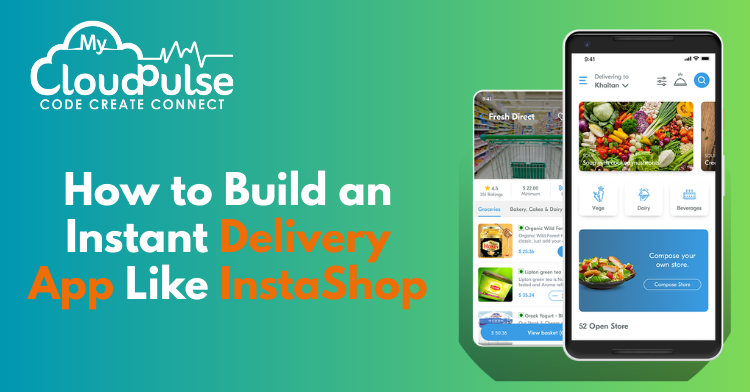
This evolution has accelerated the demand for Instant Delivery App Development, where businesses create high-performance platforms that seamlessly connect customers, vendors, and delivery partners in real time. By integrating features such as smart search, live order tracking, secure payments, AI-based route optimization, and automated inventory management, instant delivery apps ensure speed, convenience, and reliability. With scalable cloud infrastructure and data-driven insights, companies can enhance operational efficiency, improve customer retention, and build sustainable revenue models in the rapidly growing on-demand economy.
Building an instant delivery app that can compete in this market isn’t just about copying existing features — it’s about understanding user behavior, market expectations, operations, and technology integration. In this detailed guide, we’ll walk you through everything you need to build a successful instant delivery platform like InstaShop — from market realities to development processes, cost estimates, monetization strategies, and more.
Instant delivery apps connect customers with local stores and delivery partners to provide fast fulfillment of orders. Unlike traditional e-commerce platforms, these apps emphasize speed, convenience, simplified shopping, and logistical efficiency.
Founded in 2015 in Dubai, InstaShop enables users to order from a variety of shops — supermarkets, pharmacies, pet stores, bakeries, and more — with delivery times often under an hour.
Such apps operate on a hyperlocal marketplace model that handles product catalogs, user orders, store inventory, and delivery partners in real time. The booming adoption of smartphones, digital payments, and on-demand services has made this category one of the most exciting in mobile application development.
Market Stats
The on-demand delivery market — especially for groceries and essentials — has seen explosive growth over the past few years.
📊 Global On-Demand Delivery Market
- The global online grocery market is projected to account for 20% of total grocery sales by 2025, indicating rapid digital adoption of grocery shopping.
- Growth in internet penetration, urbanization, and shifting consumer lifestyles continues to drive demand for instant delivery apps.
📈 Regional Demand Trends
- In the UAE and Middle East, apps like InstaShop have seen widespread adoption due to dense urban populations and high smartphone & payment adoption.
- In markets like India, Southeast Asia, and Latin America, instant delivery services (e.g., Blinkit, Zepto) have daily active users in millions, indicating a huge addressable market.
📱 Consumer Behavior
- Customers increasingly prefer mobile ordering, same-day delivery, and real-time tracking.
- Instant delivery apps expand beyond groceries into medicines, household items, and even electronics.
Core Features of Instant Delivery App Development
The success of an instant delivery app depends heavily on its core functionality. These features form the foundation of the platform and ensure seamless coordination between customers, vendors, delivery partners, and administrators. Below is a detailed breakdown of essential core features.
1. Customer App Core Features
1.1 User Registration & Authentication
A secure and smooth onboarding process is critical for user acquisition.
Key functionalities:
- Email and mobile number registration
- OTP verification
- Social login (Google, Apple, Facebook)
- Password recovery
- Profile management
- Saved delivery addresses
Why it matters:
A fast and frictionless signup increases conversion rates and reduces drop-offs during onboarding.
1.2 Location Detection & Address Management
Instant delivery apps operate on a hyperlocal model, making accurate location tracking essential.
Key functionalities:
- Automatic GPS-based location detection
- Manual address entry
- Multiple saved addresses
- Address validation using maps API
- Real-time service availability check
Why it matters:
Precise location detection ensures accurate delivery time estimates and prevents failed deliveries.
1.3 Instant Delivery App Development
Users should easily find nearby stores offering delivery.
Key functionalities:
- Nearby store display based on location
- Estimated delivery time per store
- Store ratings and reviews
- Store categories (supermarket, pharmacy, pet shop, etc.)
- Sorting (distance, rating, fastest delivery)
Why it matters:
Store visibility and sorting improve decision-making and enhance user experience.
1.4 Product Catalog & Smart Search
A well-organized product browsing experience is crucial.
Key functionalities:
- Categorized product listing
- Advanced filters (price, brand, discount, popularity)
- Keyword-based smart search
- Auto-suggestions
- Product details page (images, price, description, availability)
- Similar product suggestions
Why it matters:
A seamless browsing experience reduces cart abandonment and increases average order value.
1.5 Shopping Cart & Checkout
The checkout flow must be quick and simple.
Key functionalities:
- Add/remove items
- Quantity modification
- Apply coupon codes
- Delivery instructions field
- Order summary (taxes, fees, total amount)
- Estimated delivery time
Why it matters:
A simplified checkout minimizes friction and increases order completion rates.
1.6 Multiple Payment Options
Secure and flexible payment integration builds trust.
Key functionalities:
- Credit/debit card payments
- Digital wallets (Apple Pay, Google Pay)
- Cash on delivery
- In-app wallet balance
- Secure payment gateway integration
- Transaction history
Why it matters:
Offering multiple payment methods increases accessibility and customer confidence.
1.7 Real-Time Order Tracking
Live tracking is a critical differentiator for instant delivery apps.
Key functionalities:
- Live GPS tracking on map
- Order status updates (confirmed, packed, picked up, delivered)
- Delivery partner details
- Estimated arrival time (ETA)
Why it matters:
Real-time tracking enhances transparency and reduces customer anxiety.
1.8 Push Notifications & Alerts
Engagement and communication rely heavily on notifications.
Key functionalities:
- Order confirmation alerts
- Delivery progress updates
- Promotional offers
- Abandoned cart reminders
- Reorder suggestions
Why it matters:
Push notifications improve retention and encourage repeat purchases.
2. Vendor Panel Core Features
Vendors are a critical part of the ecosystem.
2.1 Store Registration & Verification
- KYC verification
- Business document upload
- Approval workflow
2.2 Product & Inventory Management
- Add/edit/remove products
- Bulk product upload
- Real-time stock updates
- Low stock alerts
2.3 Order Management
- Accept/reject orders
- Order preparation timer
- Update order status
2.4 Sales Analytics Dashboard
- Daily/monthly revenue
- Order reports
- Popular product tracking
Why it matters:
Efficient vendor tools ensure accurate inventory and timely order fulfillment.
3. Delivery Partner App Core Features
The delivery partner interface must be simple and efficient.
3.1 Rider Registration & Verification
- Identity verification
- Vehicle details
- Document upload
3.2 Order Assignment System
- Auto-assignment based on proximity
- Manual acceptance option
3.3 Route Optimization
- GPS navigation
- Traffic-aware routing
- Multi-order batching (if applicable)
3.4 Delivery Status Updates
- Picked up
- En route
- Delivered
3.5 Earnings Dashboard
- Completed deliveries
- Commission breakdown
- Weekly payouts
Why it matters:
Efficient delivery partner tools directly impact delivery speed and reliability.
4. Admin Panel Core Features
The admin dashboard controls the entire ecosystem.
4.1 User Management
- View/edit user accounts
- Ban/suspend users
4.2 Vendor & Rider Management
- Approvals
- Performance monitoring
4.3 Commission & Revenue Control
- Commission percentage setup
- Revenue reports
4.4 Analytics & Insights
- Daily active users
- Peak ordering hours
- Conversion rates
4.5 Offer & Promotion Management
- Create discount campaigns
- Featured listings
Why it matters:
A strong admin panel ensures smooth operations, financial tracking, and strategic growth.
Summary of Core Features Instant Delivery App Development
To build an instant delivery app like InstaShop, your core features must focus on:
✔ Fast onboarding
✔ Real-time inventory management
✔ Seamless ordering process
✔ Secure payment system
✔ Live order tracking
✔ Vendor and rider management
✔ Centralized admin control
These foundational elements ensure operational efficiency, user satisfaction, and scalable growth.
Advanced Features of Instant Delivery App Development
After launch, advanced features help scale your app and improve competitive advantage.
🚀 1. AI-Driven Recommendations
- Personalized product suggestions
- Trending items based on shopping patterns
🚀 2. Smart Inventory Sync
- Auto updates between platform and vendor systems
- Out-of-stock replacements
🚀 3. Predictive Delivery Allocation
- Algorithmic rider assignment
- Peak-demand prediction
🚀 4. Dark Store Integration
- Micro-fulfillment centers for faster delivery
- Local stock hubs
🚀 5. Chat & In-App Communication
- Customer ↔ delivery partner chat
- Integrated helpdesk
🚀 6. Loyalty & Referral Systems
- Reward points
- Referral bonuses
🚀 7. Multi-Language Support
- Localization for regional markets
- Improves accessibility
🚀 8. Dynamic Pricing & Surge Fees
- Higher fees during high demand
- Incentivizes faster delivery
Development Process of Instant Delivery App Development
Developing an instant delivery app involves a structured software development lifecycle.
Phase 1: Discovery & Market Research
- Conduct competitor analysis
- Define unique value proposition
- Finalize core features
Phase 2: Tech Architecture & Planning
Choose platform strategy:
- Native: iOS/Android separately
- Cross-platform: Flutter/React Native
Decide backend infrastructure (AWS, Azure, GCP).
Phase 3: UI/UX Design
- Low-fidelity wireframes
- High-fidelity prototypes
- Focus on frictionless user flow
Effective UI/UX improves conversions and reduces order abandonment.
Phase 4: Backend & Frontend Development
Backend:
- APIs for user, vendor, order, delivery
- Real-time WebSocket/GPS integration
Frontend:
- Customer app
- Vendor app
- Delivery partner app
- Admin dashboard
Phase 5: Integrations
- Payment gateways
- Maps & navigation APIs
- SMS/email services
- Push notification services
These integrations are essential for real-time functionality and monetization.
Phase 6: Testing & Quality Assurance
Conduct thorough testing:
- Functional testing
- Performance testing
- Security testing
- Multi-device testing
Testing ensures reliable performance post-launch.
Phase 7: Soft Launch & Beta Testing
Launch to a limited user base to:
- Gather feedback
- Fix bugs
- Optimize features before full release
Phase 8: Deployment & Launch
Deploy to:
- Google Play Store
- Apple App Store
- Web panel for Admin (if relevant)
Ensure monitoring & crash reporting tools are in place.
Phase 9: Post-Launch Updates & Scaling
Use usage analytics to:
- Enhance UX
- Add advanced features
- Improve retention
Required Team Structure
Building an instant delivery app requires a cross-functional team:
📋 1. Product Manager
- Oversees vision
- Manages roadmaps
🎨 2. UI/UX Designers
- Design intuitive flows
- Prototype interfaces
💻 3. Mobile Developers
- Android (Kotlin/Java)
- iOS (Swift)
- Cross-platform tools
🛠 4. Backend Developers
- APIs, server logic, database
- Real-time delivery tracking backend
☁️ 5. DevOps/Cloud Engineer
- CI/CD setup
- Server infrastructure
- Scaling
🧪 6. QA Engineers
- Testing features
- Performance & security
📈 7. Data/Analytics Specialist
- Behavior tracking
- Performance insights
📣 8. Marketing & Growth Team
- User acquisition
- Retention strategies
Monetization Methods of Instant Delivery App Development
A well-planned monetization strategy is essential to ensure long-term sustainability and profitability of an instant delivery app. While user growth and operational efficiency are important, the real success lies in building multiple revenue streams that generate consistent income without compromising user experience.
Below are the most effective monetization methods for an instant delivery app.
1. Commission-Based Revenue Model
This is the primary revenue source for most instant delivery platforms.
How It Works:
The platform charges a commission percentage from vendors on every completed order.
Typical Structure:
- 10%–30% commission per order
- Different commission tiers based on vendor category
- Higher commission for promoted listings
Why It Works:
- Generates revenue on every transaction
- Scales automatically with order volume
- Encourages vendors to maintain competitive pricing
This model aligns platform growth directly with vendor sales performance.
2. Delivery Charges
Charging customers a delivery fee is another direct revenue stream.
Fee Structure Options:
- Flat delivery fee
- Distance-based pricing
- Surge pricing during peak hours
- Free delivery above a minimum cart value
Benefits:
- Covers operational logistics costs
- Improves profitability per order
- Encourages higher cart value purchases
Many apps strategically waive delivery charges above certain order values to increase average order size.
3. Subscription Model
Subscription programs improve recurring revenue and customer loyalty.
Example Subscription Benefits:
- Free unlimited delivery
- Priority order processing
- Exclusive discounts
- Early access to flash sales
Users pay monthly or yearly subscription fees.
Why It’s Powerful:
- Predictable recurring revenue
- Higher customer retention
- Increased order frequency
This model works particularly well in urban areas with frequent shoppers.
4. Featured Listings & Sponsored Promotions
Vendors can pay to gain more visibility within the app.
Monetization Options:
- Sponsored product placements
- Featured store banners
- Top-of-search results promotion
- Homepage carousel ads
Why It Works:
- Vendors get increased exposure
- Platform earns advertising revenue
- Enhances competitive marketplace dynamics
This is especially profitable during festive seasons and promotional campaigns.
5. Surge Pricing During Peak Hours
Dynamic pricing helps maximize revenue during high-demand periods.
Implementation:
- Higher delivery fees during rush hours
- Additional convenience charges during festivals
- Weather-based surge pricing
Benefits:
- Balances demand and supply
- Motivates delivery partners
- Increases revenue during peak demand
Surge pricing must be implemented transparently to avoid customer dissatisfaction.
6. In-App Advertisements
Apart from vendor promotions, third-party brands can advertise inside the app.
Ad Formats:
- Banner ads
- Pop-up promotional ads
- Native ads integrated within product listings
- Brand-sponsored discount campaigns
Advantages:
- Additional revenue stream
- High engagement audience targeting
- Minimal operational overhead
Advertising works well when user base crosses a significant scale.
7. Convenience & Service Fees
Some platforms add small service fees per transaction.
Examples:
- Platform service charge
- Handling fee
- Small order fee (for orders below a threshold)
These fees may seem minor individually but generate substantial revenue at scale.
8. Data Insights & Vendor Analytics
With proper data compliance and privacy measures, platforms can monetize anonymized analytics.
Services Offered:
- Sales performance reports
- Consumer buying behavior insights
- Demand forecasting tools
- Market trend reports
Vendors may pay for advanced analytics dashboards that help optimize inventory and pricing strategies.
9. White-Label & API Licensing
As the platform matures, it can license its technology to other businesses.
Opportunities:
- White-label grocery delivery apps
- API integration for retailers
- SaaS-based logistics platform
This opens a secondary revenue stream beyond direct consumer transactions.
10. Cross-Selling & Upselling
Smart recommendations increase revenue per user.
Strategies:
- Bundle offers
- Add-on product suggestions
- “Frequently bought together” recommendations
- Flash sales during checkout
AI-powered upselling can significantly boost average order value (AOV).
Revenue Model Strategy: Combining Multiple Streams
The most successful instant delivery apps combine several monetization methods rather than relying on one.
Example Revenue Mix:
- 60–70% commission
- 10–20% delivery fees
- 5–10% advertising
- 5–10% subscription revenue
Diversification reduces dependency on a single income source and improves financial stability.
Key Considerations for Sustainable Monetization
✔ Maintain transparent pricing
✔ Avoid overcharging customers
✔ Balance vendor profitability
✔ Focus on long-term customer retention
✔ Use data-driven optimization
Final Thought
To build a profitable instant delivery app like InstaShop, you must implement a hybrid monetization strategy that balances commissions, subscriptions, delivery fees, and advertising revenue. A well-structured model not only ensures profitability but also supports sustainable scaling in competitive markets.
Conclusion
Building an instant delivery app like InstaShop is a complex but highly rewarding venture. With on-demand services becoming part of daily life, such platforms offer convenience, speed, and seamless user experiences that traditional retail cannot match.
However, success in this market requires:
- A strong and scalable technical architecture
- Real-time tracking and delivery optimization
- Compelling UI/UX design
- Well-structured monetization streams
- Data-driven optimization and continuous improvement
By combining essential features, smart advanced capabilities, and a robust growth strategy, you can launch an app that not only meets user expectations but also captures significant market share.
FAQs
The cost typically ranges from $15,000 to $80,000+ depending on features, platforms, and complexity.
Development can take 3–6 months for a full-featured app, depending on team size and scope.
Instant delivery apps include real-time delivery tracking, scheduling, logistics management, and hyperlocal vendor integrations, beyond basic catalog browsing.
Frontend: Flutter/React Native; Backend: Node.js/PHP/Django; Database: PostgreSQL/MongoDB; Cloud: AWS/GCP; Navigation: Google Maps API.
Yes — delivery fees, ads, subscriptions, featured listings, surge pricing, and vendor fees are common additional revenue streams.